On the violence the international system can absorb, and the people left to bear its cost.
English translation of the original Romanian series.
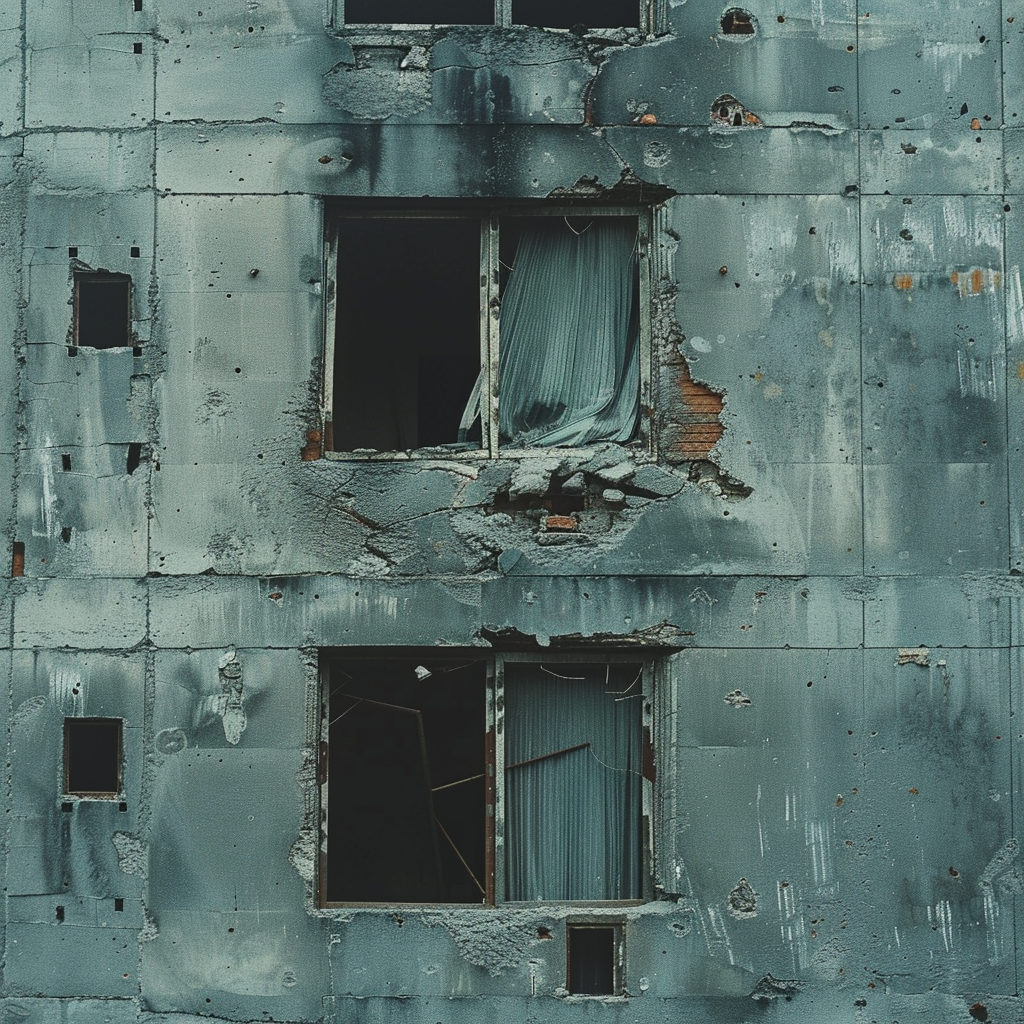
Episode 1. A War Left to Burn
Modern wars die down when they run out of money, logistics and external tolerance. All three remain in play in Sudan. This episode sets the scene: who the actors are, what it means to control flows, and why the war is fought over nodes as well as territory.
Read the full episode
Introduction
Sudan is a war that has been left to burn.
The distinction is essential. The conflict persists through a tacit choice by major actors to keep it from becoming a global emergency. Sudan burns because its burning serves converging interests, even when those interests appear contradictory on the surface.
Two kinds of power confront each other in Sudan, both incompatible with a functioning state. An army that acts as a state defends rents and international recognition. A militia that acts as a state defends resources, routes and violence as a political instrument.
In this grey zone, genocide functions as a method.
The RSF are a product
The Rapid Support Forces are the result of a deliberate policy pursued by the Sudanese state in the 2000s: outsourcing violence.
The Janjaweed provided a quick solution for a regime unable to control its periphery. The RSF are that solution matured, financed and made autonomous. Racialised violence funded from local resources becomes impossible to reform. The remaining options are to keep feeding it or to cut off its supply.
Hemedti operates as a war entrepreneur with access to gold, regional mercenary networks and outside sponsors. The RSF pursue economic sustainability.
Ethnic cleansing, control of mines, the destruction of towns and the parallel government in the west appear as logical steps in a system geared towards extraction and control.
The SAF administer a weakened state
The SAF represent the formal state. They have a flag, ministries, diplomatic relations, ports and recognition. Their legitimacy remains procedural.
The army concentrates the state monopoly and access to external rents: aid, oil, trade, and relations with the IMF and the UN. A fragmented Sudan with international recognition offers predictability. A reunified and unpredictable Sudan creates risk.
The appointment of a technocratic prime minister in 2025 served as a defensive measure intended to preserve outside support amid humanitarian collapse.
The SAF administer a weakened state and prioritise control.
Outside actors operate transactionally
Outside involvement rests on transactions.
For RSF backers, Sudan offers cheap gold, overland access to Central Africa and an environment in which instability generates profit.
For SAF backers, Sudan serves as a geopolitical buffer, a Red Sea logistics hub and a piece in the contest over the Nile, oil and maritime routes.
Control of flows takes precedence over rebuilding society. Alliances remain flexible and move with the balance of interests. Decisions follow costs and benefits.
The visibility of genocide depends on its usefulness to a narrative
Genocide becomes visible when it serves a useful narrative.
Sudan presents a complex conflict that is hard to simplify, with no aggressors easily cast as villains and no victims of strategic value to the major powers.
Journalists face blocked access. The internet goes down. Witnesses disappear. Outside actors with economic influence avoid giving the term official standing.
The result is managed silence. Delay kills.
The real axis of the conflict
Sudan is being decided along two axes.
Internal monopoly over resources. External access to trade and recognition.
The RSF control resources without an outlet. The SAF control the outlet without the resources.
That asymmetry produces an unstable equilibrium conducive to de facto partition. As long as the two axes cannot be brought together, the conflict continues at varying intensity.
Conclusion
Sudan is a conflict kept alive because it serves multiple interests without imposing decisive costs.
Gold flows. Ports operate. Drones keep front lines fluid.
Sudan remains an open wound the world ignores.
What happens in Sudan stays in Sudan because that remains convenient for the rest of the world.
Episode 2. Why Do the Real Actors Remain Invisible?
In modern conflicts, violence is visible while decisions are hidden. This episode explains how decisions disappear behind flows, procedures and intermediaries, and how that invisibility strengthens the system.
Read the full episode
The key question
Why are the main actors still hard to name publicly in a conflict so extensively documented, with clear flows of weapons, money and influence?
The answer lies in the current structure of global power. Responsibility is deliberately fragmented, and decisions are dispersed so that no one has to own them directly.
Modern power operates through invisibility
In Sudan, orders do not appear with signatures. No one officially acknowledges financing ethnic cleansing, and the documents reveal no single author. Power moves through subcontracting, re-exports, brokerage, shell companies, proxies and carefully constructed legal ambiguity.
Each actor controls one link in a divided chain. When the chain produces killing, famine or collapse, each link can invoke the technical separation between roles.
This is the architecture of invisibility.
The RSF act as the executor
The RSF are the most visible actor because they kill, occupy territory, control populations and produce raw images of violence. They become the face of the conflict and the focus of public outrage.
Major strategic decisions grow out of gold flows, tolerated smuggling routes, the lack of effective sanctions and continued access to refining and markets.
The RSF operate as an instrument that has acquired autonomy. Its violence is visible. The conditions that make it possible remain outside the frame.
Why sponsor states are hard to name directly
The reasons are structural. Outside actors involved in Sudan are tied to energy markets, regional security, shipping routes and global financial systems. Naming a state too plainly brings geopolitical costs, strains alliances and exposes dependencies.
Plausible deniability works well. Arms move through re-exports, old stockpiles, regional intermediaries and private companies. Gold leaves through smuggling, offshore firms and refiners presented as clean. Every step has enough legal cover to frustrate a direct accusation.
The UN documents. NGOs warn. International courts investigate. Enforcement is absent. Without coercive power, naming the actors remains symbolic.
Confusion works as a tool
Sudan is hard to explain quickly. Multiple armed organisations, regional interference, parallel economies and real ethnic fractures make for a dense picture. That complexity protects the main actors.
When the conflict resists a simple binary, the public tires. With fatigue comes a loss of pressure. Once the pressure lifts, the flows continue.
Confusion acts as a shield.
Who are the main actors?
If an actor is any entity without which the conflict could not continue, the list changes radically. The main actors are those who allow gold to leave, tolerate overland routes, provide refining capacity and diplomatic cover, and block effective sanctions.
They appear in balance sheets, trade agreements and legal exemptions, far from the images of the fighting.
Sudan functions as a war economy integrated into the global economy. Breaking the chain would have consequences beyond Sudan.
Conclusion
The main actors remain hard to identify publicly because modern power operates without a face. Violence is delegated, profit is divided and responsibility is dissolved.
As long as this model works, Sudan will remain the place where decisions made elsewhere are carried out.

Episode 3. The Real Actors: Who Gains, Who Tolerates It, and Who Loses
The real actors are those without whom the war could not continue. This episode separates profit, tolerance and loss, showing why some benefit, others acquiesce and most bear the cost.
Read the full episode
The premise
Sudan is a systemic conflict. It is a point where the interests of several powers overlap and coexist.
Major actors seek to stabilise their own strategic flows even when that produces permanent instability for Sudan. Understanding the conflict means shifting attention from the battlefield to the interests that shape it.
The major actors
These are the entities without which the conflict would lose its ability to function.
United Arab Emirates: Extraction without ownership
The series identifies the UAE as having the greatest indirect impact on the conflict. Its interests are structural: gold as an informal strategic reserve, overland routes between Central Africa and the Red Sea, influence over ports and logistics on the Sudanese coast, and economic reach without political commitment.
In this reading, the Emirates favour weak, dependent entities they can negotiate with. The RSF deliver gold, accept logistical protection and operate outside the democratic framework. Sudan acts as an extraction buffer integrated into a wider regional system.
Egypt: A guarantor of a weakened, predictable state
Egypt invests strategically in keeping Sudan unified and governable. It has stakes in Nile security, the stability of its southern border, refugee movements and preventing an autonomous paramilitary entity from consolidating in the west.
Cairo favours a weakened state that retains institutional coherence and is led by an army it can negotiate with. Continuity of control takes precedence over deep reform of the Sudanese system.
Iran: Strategic reach towards the Red Sea
Iran acts discreetly and with calculation. Its central interests are indirect access to the Red Sea, testing and exporting drone capabilities, and exerting pressure on regional rivals and maritime routes.
Support for the Sudanese army serves a wider regional strategy. Sudan becomes one element in an arrangement designed to exert pressure.
Russia: Using conflict as leverage
Russia sees Sudan as a source of gold for external financing, a route to indirect access to the Red Sea and a place to wear down Western influence.
Operations run through private companies, mercenaries and local intermediaries. A prolonged conflict has geopolitical utility. Fragmentation creates leverage.
United States: Managing the balance
The series takes the view that Washington has an extensive picture of the conflict, including arms routes, gold flows, refining hubs and areas of diplomatic tolerance.
Its strategy seeks regional balance, protection of its relationship with the Emirates, limits on Russian and Iranian influence, and Red Sea security. The conflict becomes something to manage.
Switzerland: A link in the economics of sustainability
Switzerland helps the global economic system function. Sudanese gold moves through regional hubs, where it enters processes of refining and certification before returning to international markets.
The argument is that procedural neutrality and trading volume help keep the conflict economically viable.
China: Keeping trade flows stable
China prioritises secure trade routes, protection of investments and continuity of supply chains. It works with actors capable of guaranteeing a minimum level of functioning.
Sudan matters as an economic node. State reconstruction is a separate question.
Saudi Arabia and Israel: Maritime security
Saudi Arabia seeks to protect shipping routes and avoid regional escalation. Israel focuses on Bab el-Mandeb and limiting Iranian influence.
Sudan’s internal dynamics take second place to maritime security.
Secondary actors
These actors have operational influence without making the central strategic decisions.
Turkey seeks economic and port influence. Qatar works through soft power and political financing. Ethiopia deals with border pressures and Nile interests. Chad is a corridor for refugees and smuggling. Arms routes run through Libya. South Sudan depends on pipelines and access to the sea. Eritrea follows the coastal security balance.
Then there are actors without flags: gold brokers, smuggling networks, shell companies and private security firms. They help stabilise the war economy.
Conclusion
The principal actors can be identified. In the series’ analysis, each faces costs for ending the war that outweigh the gains it expects. The status quo distributes benefits and leaves no decisive loser among them.
What happens in Sudan stays in Sudan because the violence has been integrated into a system that can monetise it while avoiding direct responsibility.

Episode 4. The Money Behind the War: Gold, Oil and Smuggling
Modern wars stop when they run out of money. In Sudan, money moves, changes form and is cleaned. This episode follows gold, transit hubs, refining, oil and smuggling.
Read the full episode
The premise
Modern wars stop when their financial resources run out. The war in Sudan continues because the money changes routes.
The conflict runs on war economies integrated into global markets. Resources leave areas of violence, pass through regional logistics networks and enter systems that are legally standardised. Violence produces the raw material. Logistics move it. The global economy absorbs it.
Financing sustains military capacity and gives the war its duration.
Gold as the main engine
Gold is the central fuel of the conflict because it is easy to extract, hard to trace and universally accepted. In western Sudan, artisanal extraction has become fast, cheap and susceptible to direct armed control.
The RSF exercise control through security, taxation and control of routes. Whoever guards the mine, taxes the miner and determines where the shipment goes controls the value. Gold leaves Darfur through overland corridors, reaches regional hubs, enters refining and reappears as certified metal.
In this chain, violence opens the circuit and legality closes it.
Dubai as a hub for cleaning gold
Dubai acts as a hub for transit, refining and re-export. Its capacity rests on efficiency and procedural tolerance. Gold can be mixed with other consignments, lose its original provenance, acquire new documents and enter global financial circuits.
This step turns a resource produced by violence into accepted liquidity. The visible link between crime and profit fades. The gold becomes a market asset.
The continued functioning of this hub helps keep the conflict financeable without direct political pressure.
Switzerland and the final stage of legitimisation
Final refining moves gold from the grey zone into procedural acceptance. Volume, market stability and continuity of trading chains are the dominant interests. Gold arrives with documents, the documents are validated and responsibility is closed off administratively.
This stage supports the conflict through the way the system operates. The global economy rewards procedural compliance and absorbs the resource when its legal packaging is in order.
South Sudanese oil as the second financial axis
Another major source of financing is South Sudanese oil. Pipelines cross Sudan and reach the sea through Port Sudan. Transit fees are negotiated there, logistical pressure is applied and regional political influence is generated.
Disruptions in 2024 and 2025 exposed the system’s fragility: reduced government revenue, hurried arrangements and accelerated commercial concessions. Oil stabilises parts of the state apparatus and sustains strategic interest in the coast.
The conflict thus matters to actors who take no military part in it.
Smuggling as infrastructure
Smuggling is basic infrastructure for the war. It covers fuel, weapons, drone components, food and currency. The networks are regional, adaptable and resistant to isolated interventions.
They link local violence to functioning markets and turn chaos into a coherent economic system. Their operation allows the conflict to continue.
The limits of sanctions
Sanctions work best in centralised systems with identifiable accounts and dependence on conventional banks. In Sudan, actors are fragmented, money can move physically, gold functions as currency and routes run through other countries.
Pressure on individuals leaves the mechanism intact.
What it would take to cut the flows
Stopping the flows would require strict control of refining, mandatory traceability, sanctions on trading hubs, economic costs for third countries and consistent diplomatic pressure. The effects would reach financial hubs, sensitive markets and global supply chains.
This scenario is understood and avoided.
Conclusion
The war continues because the global economy can profit from it, absorb its proceeds and manage its consequences. Gold flows. Oil crosses Sudan. Smuggling organises the system.
Open flows keep violence within an economic logic.
What happens in Sudan stays in Sudan because human life carries too little weight alongside the stability of global systems.
Episode 5. De Facto Partition: Sudan’s Emerging Order
Sudan is heading towards a functional separation with no official announcement, carried out daily on the ground. This episode looks at a west monetised through gold and routes, and an east legitimised through ports and recognition.
Read the full episode
Strategic context
Sudan is moving towards a functional separation, unannounced officially and enacted daily on the ground through logistical, military and economic decisions.
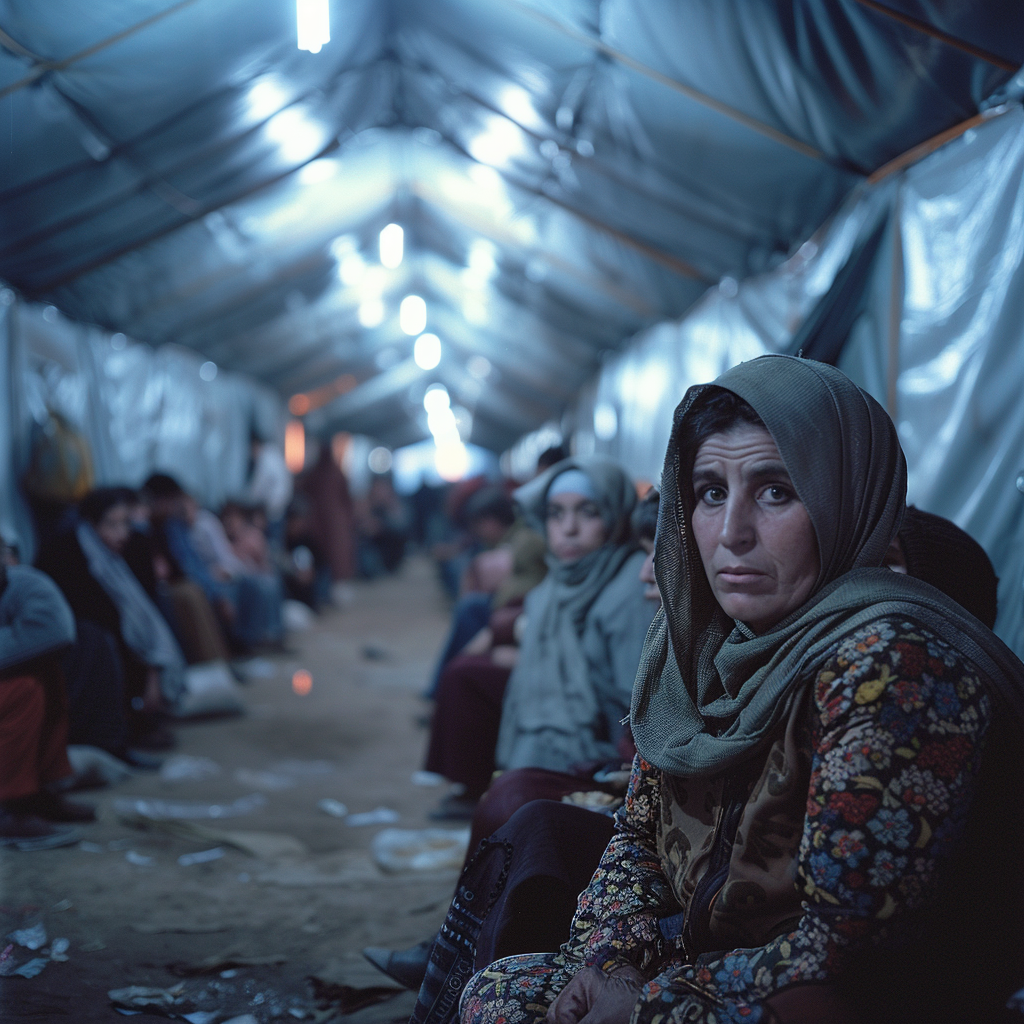
Episode 6. Why Sudan Is Treated as Expendable
Some crises become global priorities. Some are managed. Others are allowed to burn within limits. This episode examines that hierarchy, the workings of attention, the costs of intervention and why aid remains acceptable while a solution is postponed.
Read the full episode
The premise
Some conflicts become global priorities. Some are managed through negotiations, sanctions and summits. Others are allowed to burn within limits, with no real intention of stopping them.
Sudan belongs to the last category.
This follows from how the international system values lives, territory and crises in a world where attention, political capital and intervention are limited resources.
The global hierarchy of crises
The international system operates through a tacit hierarchy of emergencies. Conflicts and lives carry different weights in global decision-making.
Crises become priorities when they directly affect major economies, risk escalation between great powers, disrupt energy flows, destabilise key regions or lend themselves to a clear story with easily identified perpetrators and victims.
Sudan meets none of these criteria decisively. It poses no immediate threat to core financial markets, risks no direct conflict between great powers, produces no immediate energy shock and generates little domestic political pressure in Western countries. Its complexity makes it hard to explain or to rally people around.
Sudan ranks low in the hierarchy because it can be ignored without immediate consequences for the system.
Genocide that fails to mobilise
Sudan’s atrocities are real, documented and recurrent. They take place in scattered, hard-to-reach areas with communications outages and an uneven flow of images to sustain global attention.
The kind of genocide that mobilises the international community tends to have an easily identifiable aggressor, recognisable victims, recurring images and sustained emotional pressure on the public. Sudan presents brutality without a spectacle easily consumed by the media.
The crimes are known. The outrage needed to bring about action has yet to reach critical mass.
The cold calculation of costs
Real intervention would require more than statements. It would mean confronting gold and refining networks, sanctioning global trading hubs, putting pressure on strategic allies, disturbing fragile regional balances and committing to long-term reconstruction.
Non-intervention carries a much lower cost: limited humanitarian relief, periodic reports, diplomatic appeals and refugee management at the periphery. For the system, that option is cheaper, politically safer and easier to control.
Saving Sudan would disturb too many arrangements that are working for others.
Africa as a place where chaos is absorbed
Sudan fits a broader pattern in which Africa is made to absorb global instability.
The continent is treated as a reservoir of resources, a buffer for migration, a theatre for proxy conflicts and a place where chaos is deemed manageable as long as it stays away from centres of power.
African crises are tolerated while they remain regional, leave major supply chains open and require no costly direct intervention. Sudan fits that profile.
Why humanitarian aid is acceptable and a political solution is postponed
Humanitarian aid is compatible with the status quo. It reduces moral pressure and temporarily stabilises vulnerable populations while leaving the balance of power in place. It leaves economic flows open and requires no politically uncomfortable restructuring.
A political settlement would require cutting financial flows, confronting outside actors, rebuilding the Sudanese state and guaranteeing security over the long term. Those steps would impose real costs abroad.
That is why aid is encouraged and a solution is delayed.
What could change Sudan’s standing
Sudan would cease to be treated as expendable if it became impossible to isolate. Violence could seriously affect the Red Sea, gold flows could visibly distort global markets, famine could drive a much larger regional exodus, or a major power could begin to incur strategic losses from staying out.
Until then, the conflict will be managed without a resolution.
Final conclusion
Sudan is assessed continually. The judgement is that it can burn without changing the global order, produce deaths without major political costs and fragment without destabilising the centres of power.
That is the cold reality of the international system.
What happens in Sudan stays in Sudan because human life is valued too cheaply to justify disrupting global systems.
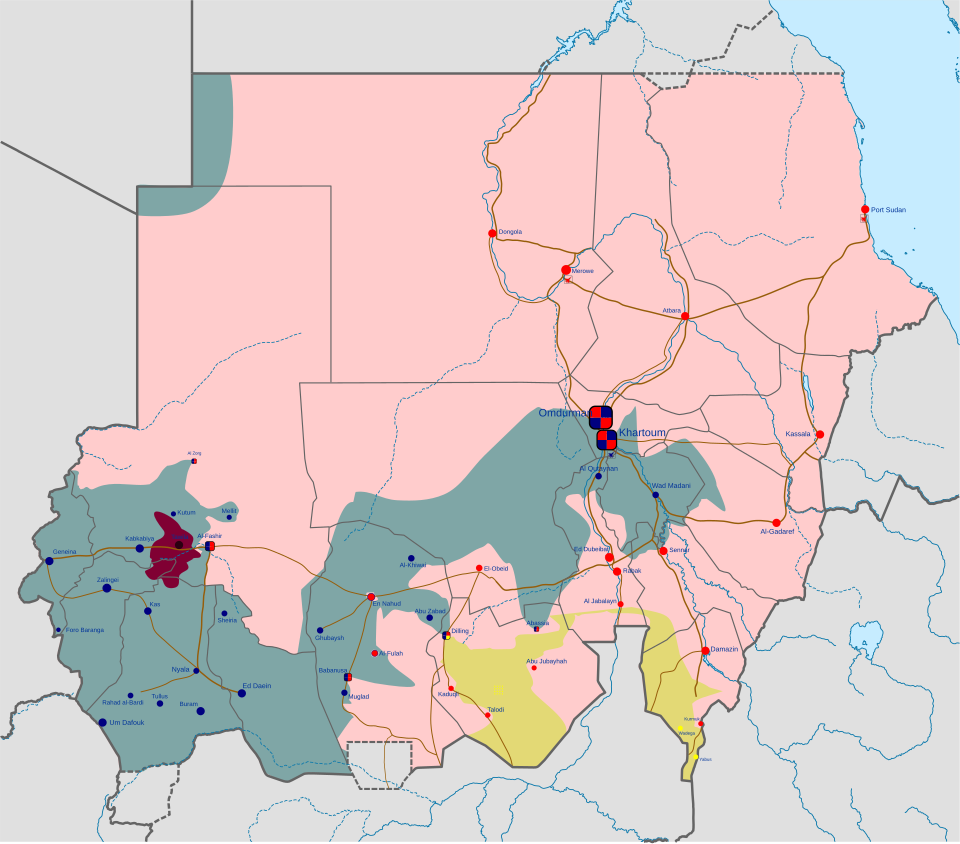
Episode 7. A Chronological Epilogue: How the Conflict Evolved and Where It Stands
Sudan’s war took shape layer by layer. This epilogue puts the key moments in order, from Darfur and the delegation of violence to de facto partition and the degraded equilibrium described in the original.
Read the full episode
The premise
Sudan’s war belongs to a recurring pattern.
Its structure appears, with local variations, in Yemen, Syria, eastern Ukraine, the Sahel, Congo and Gaza: a weakened state, delegated violence, actors that acquire autonomy, resources that can be monetised and an international system that manages the crisis without bringing it to an end. Sudan shows how this kind of war takes root and persists.
Understanding the present means following the successive breaks that shaped the conflict and help explain why this dynamic recurs in more regions.
1. Darfur and the outsourcing of violence (2003–2010)
The modern conflict has its origins in Darfur. The Sudanese state responded to local rebellions by arming the Janjaweed militias. It delegated violence and bought loyalty with freedom of action and access to resources.
Violence became a means of governing the periphery. Ethnic cleansing, forced displacement and the destruction of communities were tolerated because they offered a quick answer to a political problem at the centre.
2. The RSF become an institution and a parallel actor (2013–2018)
The RSF emerged in 2013 from networks that included the Janjaweed. Formally integrated into the state, they developed into an autonomous organisation.
The force received legal status, a budget, arms and external assignments. In parallel, it built an economy of its own through gold in Darfur, regional deployments of fighters and cross-border logistics. The state created an actor that operated by its own rules.
3. Bashir falls and leaves a power vacuum (2019)
The fall of Bashir’s regime left armed organisations active in a vacuum of authority.
The army and the RSF became joint guarantors of the transition. Two incompatible actors came to coexist within the same institutions. With security-sector reform unresolved, the conflict remained in suspension.
4. The break and the outbreak of war (April 2023)
In April 2023, latent tensions turned into open conflict between the RSF and the SAF. Fighting broke out in Khartoum and spread rapidly.
The capital became a site of urban destruction. Infrastructure collapsed. Civilians were trapped between two armed organisations focused on control.
5. The conflict spreads and intensifies (2023–2024)
As fighting in central Sudan settled into a pattern, the war intensified in Darfur. The RSF consolidated their hold in the west through ethnic cleansing, massacres and the destruction of key towns.
El Geneina, Nyala and surrounding areas became symbols of the return of genocidal violence. The army lost control of large areas. Sudan began to function under two parallel systems.
6. The turning point: consolidation and de facto partition (2025)
In 2025, the conflict entered a new phase. The priority became consolidating areas each side could control.
The RSF formalised their presence in the west, announced parallel administrative structures and controlled routes used for gold and smuggling. The SAF defended Port Sudan and critical infrastructure on the coast, with the east and the coast central to its position.
The line of separation took on an economic and logistical form.
7. The status quo described in the original
Sudan functions in fragments. In the original’s analysis, the RSF dominate western areas and parts of the central-western belt, where gold, overland routes and informal economies matter. The SAF hold the east and coast, with access to ports, international aid and diplomatic recognition.
Neither side succeeds in combining control of resources with external access. Fighting continues at varying intensity because this degraded equilibrium remains viable.
Conclusion
Sudan’s war grew out of accumulated decisions made for short-term efficiency that proved destructive to the state over time.
What remains is a degraded order, stable in its violence and sustained by flows that stay open.
Sudan matters because this model of war is spreading.
When violence is delegated, resources are monetised and responsibility is diluted, any society can find itself in the same position.
What happens in Sudan stays in Sudan because the global system runs on interests, and human life remains negotiable.
Humanitarian update · 7 November 2026
On 6 November, UNHCR and IOM said that an estimated 15.4 million people in Sudan urgently needed emergency shelter and basic household items. Separately, the October IPC alert warned of a growing risk of famine in parts of Greater Darfur and Greater Kordofan.
Reuters reporting on the UNHCR–IOM briefing · WHO on the October IPC alert
Editorial notes and sources
US State Department genocide determination, January 2025 · Chatham House on sanctions and war financing · UK country note on the security situation, July 2026 · UNHCR Sudan Situation Appeal 2026