Diagnosing an Age Without Standards
We live in an age when almost anyone can make their voice heard, and the standards by which we judge what is said have become optional. Opinions circulate in vast numbers, at speed and on seemingly equal terms. In public debate, it is increasingly difficult to uphold the distinction between expertise and personal impression.
This dissertation begins with a simple, uncomfortable observation. Information is everywhere. We are losing the filter we once used to judge it.
The series follows, step by step, how a mistake in one person’s thinking takes hold, gains social approval, is amplified by technology and acquires moral protection, until it is treated as a right to define what is true. The focus is on the forces that sustain this process and how they come to operate on a large scale.
Read the full series in Romanian
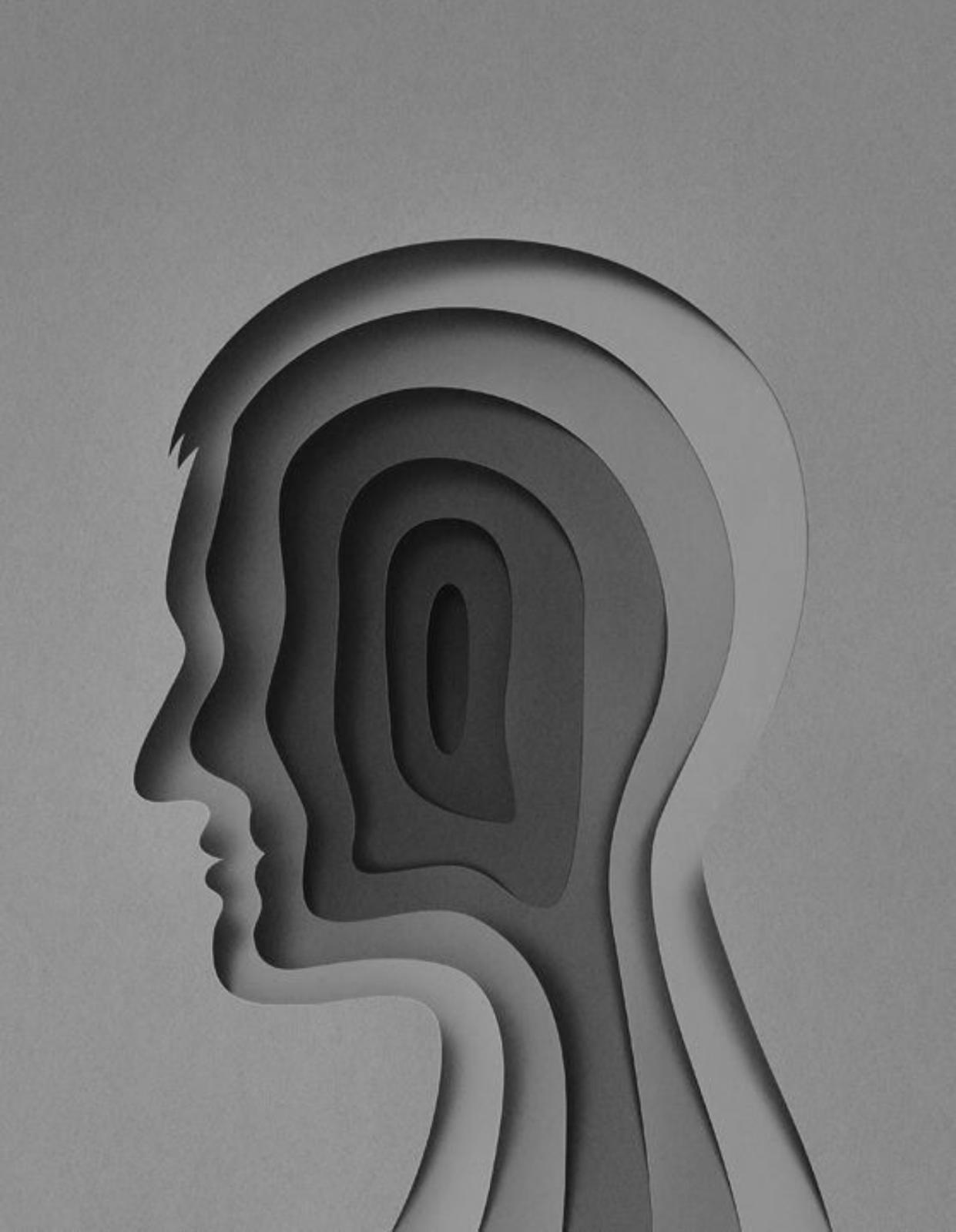
Episode 1. The Error That Cannot Correct Itself
Stupidity takes hold when a lack of competence removes the very ability to recognise an error.
Read the full episode
1. The error that cannot see itself
We begin with a fundamental point. Some errors cannot be corrected from within.
Cognitive psychology describes a particular kind of error. People with limited competence tend to overestimate the accuracy of their own judgements. David Dunning and Justin Kruger documented this phenomenon experimentally, and it became known as the Dunning–Kruger effect.
In practice, this helps explain why people with little training in a field often speak with greater assurance than those who have studied it. They cannot see what they are missing. The error takes root precisely where the means of correcting it would have to be.
2. The absence of an internal standard
The significance of this mechanism extends beyond the laboratory. The problem is structural. The error affects both the judgement and the ability to assess that judgement.
In a public debate, the person making a weak argument may see it as strong. Without internal standards for comparison, the idea seems coherent and sufficient. Corrections from others are hard to absorb when the means of assessing them are missing.
The skills needed to produce a correct answer are also needed to judge its accuracy. When those skills are absent, assessment becomes inaccessible. A persistent gap opens between actual performance and subjective confidence.
3. Certainty as a symptom
This mechanism produces a recognisable pattern. People with limited competence express firm opinions, draw unqualified conclusions and resist correction. Their assurance grows from an inability to assess alternatives.
In public debate, this takes the form of categorical statements on complex subjects, delivered without hesitation because reality appears simple to the speaker.
Doubt arises when people recognise the limits of their understanding. That recognition takes contact with complexity, comparison of hypotheses and an acceptance that one might be wrong. In the absence of these processes, certainty comes easily.
4. The difference between competence and confidence
People with genuine expertise tend to speak more cautiously in public, pay closer attention to nuance and show greater willingness to revise their views.
As competence grows, confidence becomes better calibrated and speech more measured. At the lower end of performance, a lack of standards gives certainty room to grow.
This helps explain why the most assured voices are often the most mistaken and why caution is read as weakness.
5. The spread of error
This mechanism has always existed. The context has changed. Broad access to public debate gives unwarranted confidence visibility, staying power and validation from others. What once stayed local or marginal is now everywhere.
This is the shift that defines the age. Error is distributed.
Conclusion
Stupidity gains influence when it loses contact with the standards that would allow it to be corrected.
An error that cannot assess itself takes hold. Once established, it seeks exposure. This is the first layer of the diagnosis.
The next episode examines how the mind comes to favour certainty over accuracy.
“The trouble with the world is that the stupid are cocksure and the intelligent are full of doubt.” Attributed to Bertrand Russell

Episode 2. The Economy of Unwarranted Certainty
Certainty expressed without hesitation travels more easily than careful thought and comes to dominate public conversation.
Read the full episode
Some people say things that are wrong with disarming confidence. Their tone stays steady, their sentences flow without pause, and the subject seems closed before it has truly been opened. As far as they are concerned, everything is already clear and settled.
There are no pauses, no cracks. Everything seems to have been resolved in advance.
This kind of certainty is common in public conversation. The uninterrupted flow of speech gives it force. The explanation comes easily, is easy to repeat, and makes the world seem already understood.
1. The certainty that disarms
Excessive confidence has a particular effect on conversation. It closes the subject before anyone can explore it. A steady tone and the absence of pauses give the impression of a definitive conclusion.
That confidence often rests on a shallow reading of reality. The explanation is coherent enough to keep going and too thin to withstand close examination.
It holds together because it leaves no point at which anyone can test it.
2. Certainty as the default position
An old Romanian saying captures this behaviour well. “A fool is never fool enough without a dose of conceit.”
The conceit here goes deeper than vanity. It is the conviction that one already understands the world and that one’s own explanation is enough.
The conceited fool has an explanation for everything. In his eyes the matter is settled, and any attempt at nuance looks like an unnecessary complication.
3. The psychological efficiency of simple explanations
The mind accepts this confidence because it is efficient. A fluent explanation makes it easy to take a position, make a decision and keep talking.
Psychologist Daniel Kahneman describes this in terms of how the brain processes information. We favour explanations that come easily over those that require us to stop, adjust our thinking or suspend judgement.
Internal coherence becomes enough to keep the explanation going, even when its connection to reality is fragile.
4. The advantage of certainty in public conversation
The problem becomes visible when this kind of confidence enters public conversation.
Certainty quickly takes centre stage. It is expressed clearly, travels easily and stays in circulation. Its pace suits the flow of public discourse.
Careful judgement takes time. It involves pauses, adjustments and a willingness to reconsider. A conclusion can wait.
In a space that favours quick reactions and a constant flow of speech, that kind of care becomes difficult to sustain.
5. How perceptions change
As this imbalance settles in, perceptions begin to shift.
Hesitation comes to signal weakness. Revision suggests instability. Silence looks like the absence of a position.
Meanwhile, the confident assertion becomes a point of reference through sheer presence and repetition.
Conclusion
Excessive certainty offers an apparent advantage. It keeps speech flowing and dominates the conversation.
Caution arises when reality is too complex for quick conclusions. Complexity has little traction in a space that rewards an uninterrupted display of confidence.
From here, the problem extends beyond the individual. It becomes a social phenomenon, accepted as normal and carrying few visible costs.
The next episode follows what happens when individual certainty finds confirmation in a group.
“Overconfidence is a symptom of ignorance. When you are too sure of yourself, a crucial piece of information is missing.” Attributed to Eoin Colfer

Episode 3. From Individual Stupidity to a Collective Phenomenon
An individual error gains force when a group confirms it and turns it into accepted discourse.
Read the full episode
Stupidity first appears in an ordinary form. Someone says something with confidence, without having seriously checked it. Nothing in the act itself suggests that anything is missing.
The explanation seems sufficient. It fits together in the speaker’s mind and causes no discomfort. The claim holds steady and goes unquestioned because the internal means of prompting an evaluation are absent.
At this stage, stupidity is personal. It travels little and could disappear without consequence, as so many careless remarks do.
1. The encounter with others
Things change when the idea stops being solitary and begins to be heard from several directions.
We all seek confirmation to get our bearings. We need to know that what we say has a place in the world and is shared by someone else.
Hearing the same idea again, voiced by another person, quietly changes its status. It begins to seem normal, familiar and acceptable.
Confidence grows without verification. It feeds on echoes and the sense that the idea will keep finding support.
2. When stupidity becomes a theory
In describing this process, we speak of stupidity as something already recognised. From within, it has a different standing.
Once voiced, accepted and taken up by the group, it functions as discourse, as an alternative explanation, as an interpretation detached from reality and validated socially.
From outside, we call it stupidity. Inside the group, it goes by another name. Theory.
3. Attachment to the group
Once confirmed, a foolish idea becomes more than an isolated claim. It takes on a social role and becomes a sign by which people recognise one another.
The idea now matters for the ties it creates as well as for what it says. Attachment grows because it offers a sense of belonging to a shared mental world.
As the circle widens, the idea is repeated, rephrased and reinforced. Repetition makes it familiar. Familiarity stabilises it, and stability lends it weight.
4. How the group makes it stick
The group becomes the main source of reinforcement.
Claims circulate freely within it, and the absence of resistance strengthens them. Work on polarisation and echo chambers, including that of Cass Sunstein, shows how like-minded groups reinforce their beliefs through accumulation and repetition.
Confidence grows, the tone hardens and positions become rigid.
5. The illusion of legitimacy in numbers
When many people say the same thing, the idea can seem sound simply because it is everywhere.
Visibility creates an impression of value. Repetition creates an impression of truth.
Stupidity takes deeper root through constant circulation, even in the absence of argument.
Conclusion
Gradually, it becomes background. Its presence stops attracting attention, and it begins to set the unspoken terms of conversation.
Anyone who challenges it seems out of step with the consensus. Anyone who analyses it seems to be making things unnecessarily complicated. Anyone who repeats it seems realistic and grounded.
Social validation turns an individual failure of self-restraint into a durable phenomenon. Organised stupidity gains strength through continuity, attachment and group pressure.
The next episode looks at how technology takes up, amplifies and exploits this established form of stupidity.
“Madness is rare in individuals. In groups, parties, nations and epochs, it is the rule.” Friedrich Nietzsche
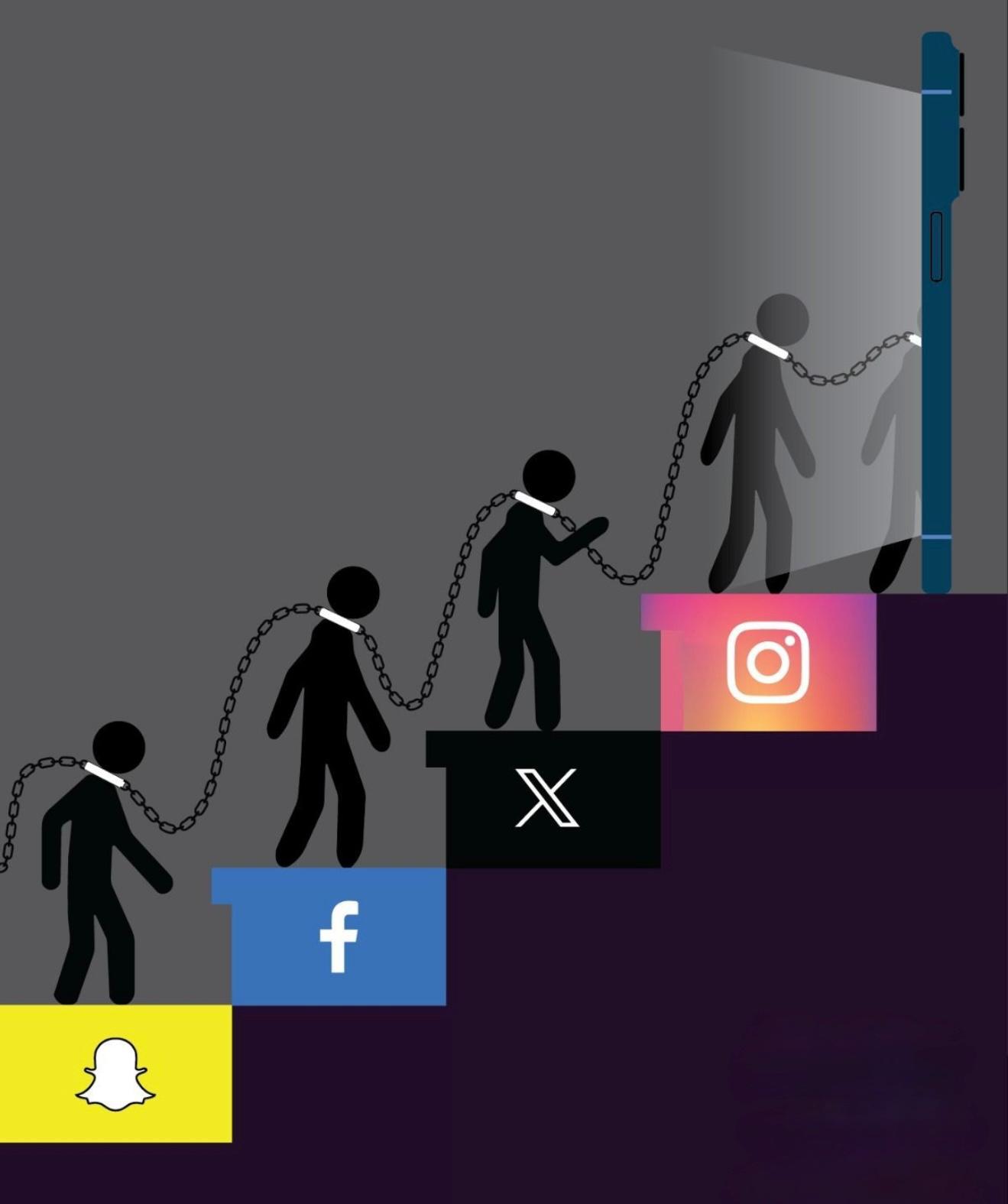
Episode 4. When the Medium Starts Choosing for Us
The digital environment favours simple, confident ideas. Repetition makes them look normal.
Read the full episode
The path so far has been clear. We began with a person who voices convictions confidently without a real capacity for self-correction. We saw certainty settle in and become preferable to doubt because psychological comfort takes less effort than careful thought. Then those certainties met, recognised one another and settled into a group, where stupidity acquired a social form and belonging began to protect it.
Here the scale changes.
Socially reinforced stupidity encounters an environment that makes it visible, persistent and influential without anyone having to intend that outcome. Technology provides the setting.
1. Speed as a structural advantage
Digital platforms create a space in which some kinds of speech move faster than others. Simple explanations delivered with confidence travel faster than explanations that require context, nuance and time to think.
A different standard comes into play. Some ideas are easy to take in. Others require effort. The medium consistently favours the former.
At this pace, speed begins to look like merit. What reaches many people quickly seems important. What appears often starts to seem relevant.
2. When familiarity takes the place of validation
Repeated exposure creates familiarity, and familiarity creates a sense of normality. As the effort of checking takes its toll, the mind begins to mistake that feeling for validity.
Cognitive psychology has long described this process. Repeated exposure increases acceptance even when the material remains weak or questionable. Familiarity helps explain why frequently encountered ideas seem truer without having been examined carefully.
The standard shifts almost imperceptibly. Judgement begins to rely on frequency, leaving the idea’s relationship to reality in the background.
3. Reaction as a signal
The digital environment also favours immediate reaction. A message that provokes anger, confirms a belief or stakes out a clear position generates a quick, measurable response that is easy to act on.
Reaction becomes a signal. Content gains weight through the effect it produces, even when its reasoning is thin.
The algorithm picks up that signal and passes it on. Human reaction becomes the main criterion for distribution. Intense emotion, simplified conflict and unqualified certainty feed this process more effectively than a careful explanation that asks the reader for patience and attention.
4. The attention economy and the distortion of public discourse
Studies of the attention economy point in the same direction. Platforms optimise for engagement and retention. Content that keeps users active and reacting is favoured. Speech that slows consumption loses ground. Speech that speeds up reactions gains visibility.
The process is self-reinforcing and needs no hidden plan.
Over time, it distorts public discourse. Ideas that ask for reflection recede into the background. Those that offer quick meaning and a clear position come to dominate. Loud certainty is more visible than understanding earned through effort because it fits the medium better.
5. When stupidity becomes functional
In this setting, socially reinforced stupidity acquires a function. It produces reactions, keeps things moving and feeds the system. It adapts to the demands of the digital environment and performs better than speech that asks people to engage with complexity.
The fit is structural.
Continual exposure establishes these ideas in the collective mental background. They become part of the landscape and cease to surprise anyone or invite demands for justification. Correction becomes harder once stupidity passes for normality and normality itself escapes scrutiny.
Conclusion
An uncomfortable conclusion follows. Wide circulation starts to look like a warning sign. What travels furthest tells us more about how the medium works than about the truth of what is being said.
Visibility becomes a symptom.
Technology amplifies what is already present in the group. It gives it pace, visibility and continuity. Standards fade, and organised noise takes centre stage because it fits the structure of the medium so well.
The problem now moves into moral territory. The next episode examines the confusion at the heart of the age, when the right to speak begins to be taken as evidence of the value of what is said.
“What is true is not always popular. What is popular is not always true.” Attributed to Albert Einstein

Episode 5. The Fatal Confusion Between Rights and Merit
Confusing the right to speak with the merit of what is said gives stupidity moral protection.
Read the full episode
So far, we have seen stupidity emerge in the individual, become entrenched through certainty, gain social acceptance and acquire speed and visibility through technology. The process now reaches deeper, into the way society sets its moral standards.
Here the central confusion of the age comes into view.
In public discourse, the right to speak is gradually treated as evidence of the merit of what is said. Expressing an opinion gives it standing. Its presence in the conversation begins to confer legitimacy.
1. Confusing rights with merit
The distinction between having a chance to speak and having something sound to say begins to blur.
The confusion takes hold slowly. Rights expand, as they should in an open society. Speaking publicly becomes easier and more widely available.
Meanwhile, the standard that distinguished opinions as personal expression from ideas as tools for understanding reality begins to dissolve.
2. When an opinion’s existence is enough
In this setting, the mere existence of a claim begins to count in its favour. The fact that someone has expressed an opinion is treated as sufficient.
Questions about whether it holds up are left open or taken as hostile, elitist or restrictive.
Social psychology and communication studies have long described this effect. Repeated exposure increases acceptance regardless of accuracy.
3. Familiarity weakens scrutiny
The phenomenon appears in research on the illusory truth effect, group polarisation and social conformity.
Ideas we encounter often become familiar, and familiarity is comforting. Comfort lowers vigilance. Scrutiny fades as the message becomes commonplace.
Conversation begins to operate on a false equivalence. Opinions appear equal by virtue of being voiced.
4. Defending an idea becomes defending an identity
Any attempt to distinguish between claims can be taken as an attack on rights. Evaluation is perceived as exclusion.
Drawing distinctions between ideas is confused with discriminating between people. Examining what was said becomes difficult without provoking defensiveness.
Social psychology suggests that people tend to defend both the ideas they express and the right to express them as part of their identity.
Once those two things overlap, criticism of an idea feels like an attack on the person.
5. The moral protection of stupidity
Stupidity acquires a kind of moral protection. The act of speaking shields the claim regardless of whether it holds up.
The mere fact that an idea has been uttered becomes its shield. The idea retreats behind the right.
Public discourse fills with claims that go untested because the act of testing them has itself become suspect.
There is a subtle pressure to accept everything in the name of tolerance. Clarity gives way to moral comfort.
Conclusion
This confusion has a profound effect on collective conversation. When standards disappear, noise becomes the norm.
Organised stupidity, already amplified by technology, can dispense with persuasion. Being present and being voiced is enough.
Its protection comes from confusing rights with merit.
An essential stage is now complete. Stupidity can function as legitimate discourse because of a moral error in how claims are evaluated.
From here, the problem takes a clearer shape. As standards recede, intellectual authority begins to erode. Its very existence becomes uncomfortable in a space that rejects hierarchy.
“The fact that an opinion has been widely held is no evidence whatever that it is not utterly absurd.” Attributed to Bertrand Russell
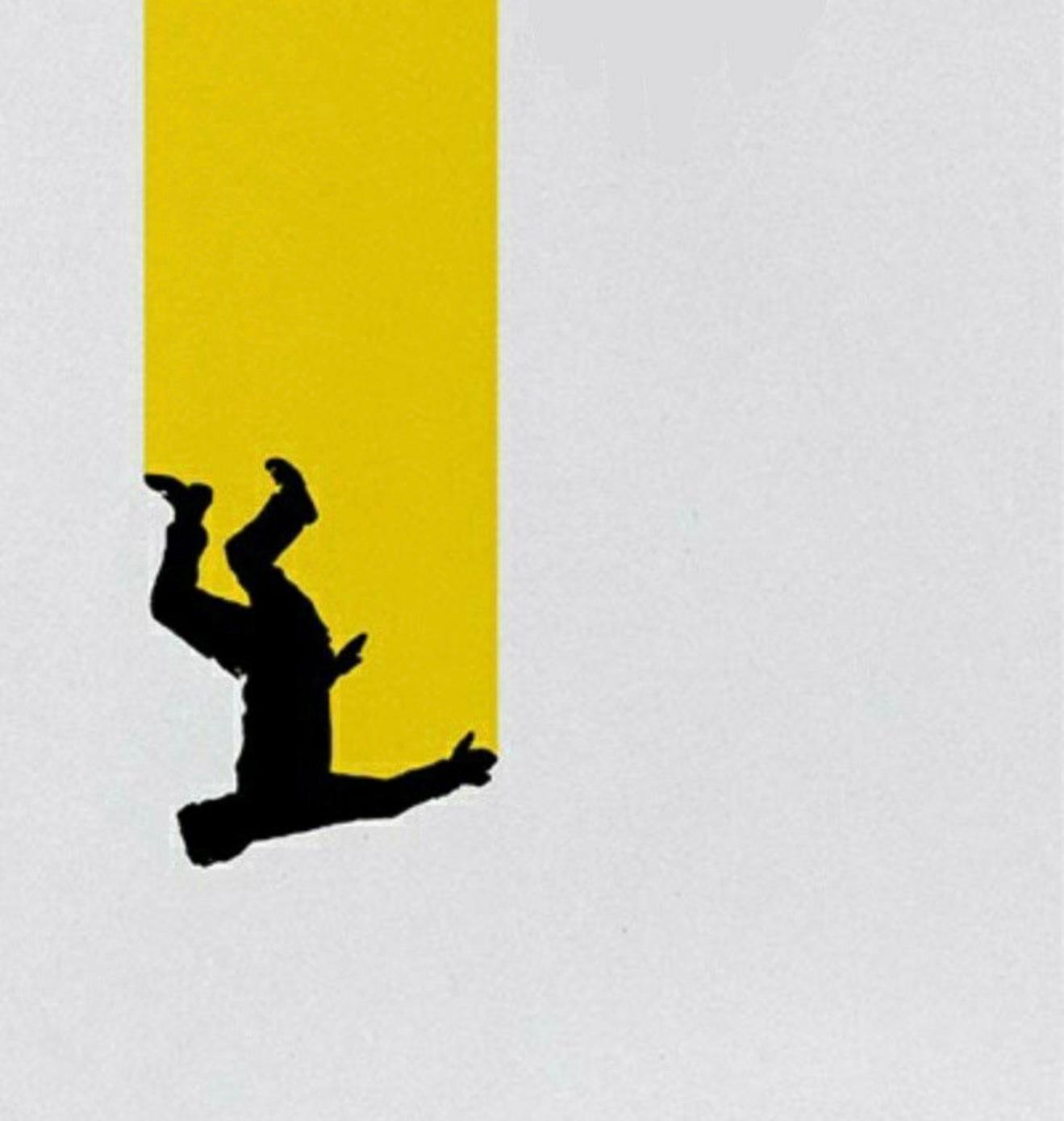
Episode 6. The Death of Intellectual Authority
When standards disappear, expertise loses its authority and competence becomes suspect.
Read the full episode
So far, we have seen an individual error become an entrenched certainty, then a social norm, and eventually something that thrives in the media. The next threshold changes what is at stake again. The focus shifts from ideas to the standing of those who put them forward.
Intellectual authority begins to dissolve.
1. When expertise becomes a source of tension
In public debate, experts increasingly find themselves on the defensive. Their presence is treated as a disruption in a setting accustomed to giving all opinions equal weight. Differences in competence once helped people find their bearings. They now create tension over status.
Behind this shift is a persistent confusion between access to information and understanding it. The abundance of data, analysis and explanations creates an impression of general competence. Having information at hand makes it feel understood. Familiarity with a subject easily slips into a sense of mastery, while experience built over years of selecting and filtering information becomes harder to distinguish.
2. The erosion of expertise
Tom Nichols describes this as a gradual erosion of expertise. It wears down as its standing fades. Experts are still there, though the standards that supported their position grow indistinct. An explanation becomes unwelcome when it clashes with settled perceptions.
In this setting, competence is read through the lens of presumed intent. Experience looks like rigidity. Precise language suggests aloofness. Clarity feels like pressure. These interpretations arise in response to the gap the expert makes visible, regardless of the substance of the explanation.
3. When specialisation becomes a liability
A paradox of the age takes shape. Wider education and access to information create a climate in which their natural outcome, specialisation, becomes a liability in the eyes of the public. Learning loses prestige. Expertise becomes vulnerable in public view.
As this logic takes hold, the expert is pushed to the margins. A voice that once helped people get their bearings becomes one more in a chorus of opinions given equal standing simply because they are present. Competence loses its particular weight, and differences become harder to defend publicly.
4. Public debate loses its ability to recalibrate
The cumulative effect is structural. When expertise loses its role as a guide, public debate loses its ability to recalibrate. Decisions are shaped by comfort, affinity and immediate reaction. Explanations that require people to adjust or revise their views are hard to absorb.
At this point, the relationship with intellectual authority changes decisively. Difference itself begins to provoke objections, even in the absence of error. Competence becomes a question of status in a setting that levels differences in standing. The gap feels like pressure regardless of what it can help us understand.
5. Competence becomes a target
A provisional verdict emerges. The expert’s position becomes fragile because their presence introduces a hierarchy into a space that has lost the standards by which hierarchies can be justified. Learning becomes a liability in public perception, and competence makes its bearer a target.
Conclusion
From here, another apparent source of stability comes into view. As the expert’s judgement is treated as just another opinion, authority shifts towards numbers. The next episode examines this shift and its structural limits.

Episode 7. Why the Majority Cannot Produce Truth
Numbers can produce consensus and reassurance. Truth has its own criteria.
Read the full episode
There is a peculiar calm in being one of many. Numbers provide a kind of reassurance that is hard to find alone. Individual exposure decreases, personal responsibility is diluted, and ideas seem to gain substance simply by circulating among many people.
When several voices make the same claim, it begins to settle differently in the mind. Repetition creates psychological stability. People feel oriented when those around them say the same thing, and this sense of security arrives before they assess the claim itself.
1. The reassurance of numbers
This mechanism offers a kind of collective protection. A mistake is easier to bear when it is shared. Consensus becomes a point of reference, and the majority gradually comes to be seen as a source of validation.
In social life, this stability serves a real purpose. Groups need agreement to make decisions, coordinate action and maintain order. Agreement makes cooperation easier and reduces friction.
2. Applying the same logic to knowledge
The difficulty arises when this logic is carried over into questions of knowledge. Numbers are assigned a function they cannot fulfil.
As intellectual authority erodes, public discourse looks for another source of stability. When expertise loses its guiding role, the crowd begins to fill the gap.
Consensus takes the place of authority, and collective agreement is made to carry more intellectual weight than it can bear.
3. What numbers actually change
Numbers aggregate opinions. They show how beliefs are distributed within a group at a given moment. Their accumulation makes an idea more visible and amplifies its social presence.
The relationship between that idea and reality is a separate matter.
Repetition on a large scale creates familiarity. Familiarity creates comfort. In time, comfort is taken as a sign that the idea is sound.
The idea begins to seem solid because it is everywhere.
4. The structural limit of the majority
The analogy is simple. Fifty blind people gathered in one place can agree on a direction, reassure one another and find a measure of calm. The ability to see is still absent.
Adding people does not turn that absence into sight.
Public discourse often overlooks this limit. Democratic reasoning serves the distribution of rights and the making of collective decisions. It is then extended to questions of knowledge.
5. Popularity as a substitute for argument
Popularity begins to count as an argument, and agreement becomes the criterion.
Complex ideas lose ground because they require time, attention and tools for assessment. Simple ideas are easy to repeat and recognise, so they circulate faster.
The majority favours accessibility and speed, two qualities that help ideas spread.
Conclusion
As this arrangement takes hold, disagreement becomes uncomfortable. An informed minority attracts suspicion. Refusing to join the consensus can look like withdrawing from the group.
Volume and repetition exert pressure. Argument recedes into the background.
Truth begins to be treated as a statistical question. What many people support seems solid. What few people support seems fragile.
A majority can coordinate action, make decisions and stabilise behaviour. Truth follows different rules.
Access to speech is widely distributed. The accuracy of a claim is independent of how many people make it.
From here, the question moves to what each person chooses to attend to. When expertise and majority opinion cease to offer reliable guidance, attention becomes the last working filter.
The next episode examines this deliberate withdrawal and the reasoning behind it.
When all think alike, no one thinks very much. Walter Lippmann

Episode 8. The Stoics and Mental Hygiene in a Noisy World
In an environment saturated with stimuli, choosing what deserves attention becomes the main instrument of mental hygiene.
Read the full episode
Sometimes noise has no identifiable source. There is no quarrel, crisis or emergency. A steady background of opinions, reactions, alerts and interpretations settles in. The mind stays open for too long and begins to tire without knowing exactly where the fatigue comes from.
In such an environment, attention fragments. Thoughts follow one another quickly and rarely have time to settle. Information is glanced at, assessed superficially and immediately replaced by something else. The connection remains constant while the ability to recognise what is worth keeping begins to weaken.
1. The problem moves inward
Once standards have faded, expertise has eroded and the majority has begun to serve as a measure of truth, the question becomes more personal.
What can a person do when public discourse offers few reliable points of reference? How can they protect their mind in an environment that continually demands a reaction?
This is where the Stoics enter.
2. The Stoic distinction
Marcus Aurelius, Epictetus and Seneca propose a discipline of inner life. Their attention is on how the mind processes what the world presents to it.
At the heart of this discipline lies a simple distinction between what appears in the mind and what the mind comes to accept.
The Stoics call the first stage an impression. It arises spontaneously. A piece of information, an image, an opinion or a collective reaction can enter our field of attention without permission.
The second stage is judgement. This is where a decision enters. The problem begins when assent to an impression becomes automatic.
3. The space for freedom
Epictetus describes this moment in terms of assent. The mind can say yes, say no or suspend judgement until things become clearer.
That small interval between stimulus and assent is where inner freedom becomes possible.
The analogy is simple. A door opening onto the street lets in the noise of the city. Closing the door determines how much of that noise enters the house.
The Stoics place that door inside the mind.
4. Reaction as reflex
Stimuli have always existed. So have social agitation, conflicts of ideas and public pressure. The difference lies in volume and speed.
The constant stream of reactions all but eliminates the gap between impression and judgement. Reaction becomes reflex.
Stoicism seeks to restore that distance.
5. The hygiene of attention
For Marcus Aurelius, mental discipline begins with a simple exercise. Describe things as they are before loading them with interpretations.
A claim becomes just a claim. An opinion becomes just an opinion. In this neutral form, many lose their power to dominate thought.
Seneca treats attention as a limited resource. People guard their possessions carefully, yet often leave their minds open to any intrusion.
Anyone can enter with an opinion, an outrage or a fear. Mental hygiene becomes a way of managing one’s own energy.
Conclusion
This discipline produces a paradoxical effect. The world remains as noisy as ever, and the individual is free to decide which signals become material for thought.
Much can pass through the field of attention without being processed further.
Over time, this filter changes our relationship with public discourse. Deliberate selection takes the place of automatic reaction.
Each person decides what is worth following, what deserves examination and what can remain background noise.
Stoicism thus becomes a way of managing one’s own mind in an environment saturated with stimuli.
Choosing where to direct attention takes on a function akin to hygiene. The mind has limits. Clarity comes through reduction.
Sometimes quiet yields more understanding than accumulation.
In a world saturated with noise, choosing what deserves attention becomes a condition of intellectual survival.
The final episode closes the circle. After the individual, the group, technology, morality, authority and numbers, one question about our age remains.
What has actually changed?
You have power over your mind, not outside events. Realise this, and you will find strength. Marcus Aurelius

Episode 9. The Verdict on Our Age
When the filter disappears, noise shapes our perception of reality. Truth survives wherever attention is sustained.
Read the full episode
At the end of this series, one point needs to be made clear. Stupidity has existed in every age. What has changed is the environment in which it circulates today.
In other periods, stupidity met with friction. Exposure was limited, correction more often came from people nearby, and weak ideas often stayed within their own boundaries. Today that friction has fallen considerably. The environment allows ideas to spread quickly, receive repeated confirmation and gain moral protection. Stupidity has found ideal conditions in which to propagate.
The mechanism is already visible. Individual certainty produces comfort, comfort draws the group, the group provides validation, and technology amplifies that validation. Visibility begins to be read as relevance. The right to speak takes on the status of an argument. Standards quietly recede. Volume takes their place.
Our age gives an appearance of equality to opinions simply because they are present. Differences in competence, method or rigour become hard to sustain in public view. They require standards, and standards introduce tension into an environment that prefers a superficial balance.
Truth remains present in this landscape. It is still formulated, tested and refined. The difficulty lies in reaching it. In a space saturated with reactions, truth requires time, attention and selection. Those resources have become scarce. Truth remains at work in the structure of the world as its visibility declines.
Here is the real change of our age. Stupidity becomes the background and a habitual way of relating to the world. Anyone who challenges it seems rigid. Anyone who analyses it seems to be overcomplicating matters. Anyone who ignores it seems elitist. The system settles around mediocrity expressed with confidence.
The verdict on our age is simple. The filter is missing. Once every claim acquires the status of a legitimate opinion, it becomes difficult to find a reliable point of reference. When standards recede, noise begins to shape the perception of reality.
In such an environment, the only effective defence is selection.
Choose the ideas.
Choose the sources.
Choose the reactions.
Some claims deserve attention. Some disputes are worth entering. Some voices deserve to serve as a point of reference.
Clarity begins when people reclaim their right to filter.
Truth persists in this landscape. It becomes less visible and less popular. It continues to exist wherever there is patience, method and intellectual discipline.
Conclusion
The series ends here. The problem remains.
The world will continue to be noisy. The crowd will confirm whatever gives it comfort. Technology will accelerate the circulation of ideas.
In this landscape, clarity begins within each person.
Each of us decides which ideas deserve attention, which deserve thought and which can remain background noise.
Stupidity will continue to circulate.
Truth remains wherever standards endure.
In a time of universal deceit, telling the truth becomes a revolutionary act. Attributed to George Orwell