Reading closely. Essays on books worth living with long after the final page.

The Story of San Michele: Axel Munthe
A journal written between the scalpel and the gentle light of Capri. A doctor gives compassion the same standing as science. A book about dignity, kindness and a quiet peace with the end.
Read the full review
A review and reflection by Confussius
Introduction
The Story of San Michele gathers Axel Munthe’s life into pages that read like an intimate diary. The Swedish physician tells his story with the clarity of someone accustomed to suffering and the delicacy of someone who has learned to see beyond it. Among crowded hospitals, sick people, rescued animals and the light of Capri, a portrait emerges of a conscience in search of peace.
The book takes shape in brief episodes, scenes and encounters with people and animals. Munthe chooses his landmarks by how intensely he lived them. The calendar matters less. From these memories emerges a life lived attentively, at times wearily, and with a clear sense of duty to the vulnerable.
The doctor who watches, listens and learns
Axel Munthe pays attention to the people in his care. He listens and watches, trying to understand their fear, shame and helplessness. He presents himself as a witness involved in what he sees. His patients come into view as fragments of lives that happened to cross his for a time.
His relationship with animals adds a particular depth to the book. Dogs, birds and creatures injured or forgotten find shelter and care. The way he treats them suggests something simple and powerful. How a person treats animals tells us something essential about who they are within.
San Michele, a house and a metaphor
Villa San Michele on Capri becomes the place where all these experiences seem to come together. Its walls, terraces and gardens give a physical shape to balance. Work, fatigue, the need for solitude and a love of beauty meet there. The house gradually becomes a refuge where the soul can catch its breath.
In the end, San Michele is more than a house overlooking the sea. It becomes an image of what remains of a person after many trials, an inner place where dignity, kindness and exhaustion sit at the same table.
A serene encounter with the end
In the closing pages, Munthe appears old, exhausted and almost physically spent. The voice grows simpler and steadier. Death enters as a quiet, familiar presence. His imagined conversation with it is deeply moving in its naturalness. Behind the words you sense a man tired from the journey who still cares for life.
There is a quiet acceptance, free of revolt or pathos. His composure offers one of literature’s most peaceful images of death. At that moment, the doctor and the writer give way to a man at peace with how he has lived.
The Confussius verdict
The Story of San Michele is a meditation on dignity, gentleness and responsibility. It portrays a man who lived close to suffering and chose to keep something bright within himself. Without grand gestures or loud declarations, the book shows how steady kindness becomes a way of standing upright in the world.
It leaves a rare feeling behind. A life attentive to others quietly builds a kind of inner peace that needs no defence.
Recommendation
For days when you need a calm, deeply human book. Read it slowly, with room for silence between chapters, as though you were talking across a distance with someone who has seen a great deal and chosen to remain gentle.
Confussius
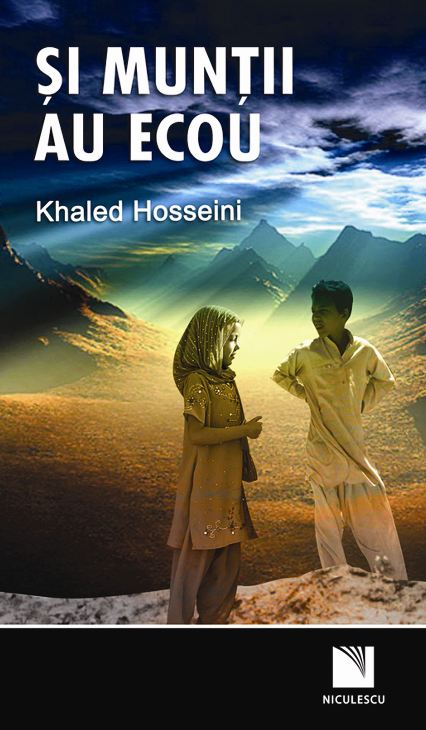
And the Mountains Echoed: Khaled Hosseini
A story of separations that stay with us and a longing that keeps breathing through time. Lives break apart, silences grow heavy and love becomes an echo. Hosseini writes with clarity and compassion about people who go on looking for each other even when life carries them far apart.
Read the full review
A review and reflection by Confussius
Introduction
And the Mountains Echoed is a novel about the distances that open between people and about how longing stays alive even when their lives branch in directions nobody could have foreseen. Hosseini writes with an unsparing tenderness, a blend of compassion and clarity that shows how easily love can turn into guilt and memory into a burden.
The story begins with a brother and sister separated in childhood. A decision made out of love splits a world in two, and its echo carries across years and generations. Each character lives in the shadow of that rupture. Some try to mend it, others to understand it, and others simply to live through the silences that time makes louder.
Quiet wounds and lives that seek one another
The novel works like a map of invisible wounds. Each life is a variation on the same question. What remains of the soul after loss, and what keeps two people bound even when their paths lead in opposite directions? Hosseini’s prose is clear and attentive, like soft light in an old room, revealing the details without overstating them.
Afghanistan becomes more than a setting. It is a place where beauty meets fragility, and hope and pain coexist. The characters carry guilt, regrets and memories, along with a persistent need to rebuild bridges.
How time wears down the edges of grief
Hosseini shows how time softens the contours of suffering while keeping its essence alive. Even decades later, a loss still echoes like an inner sound that never quite fades. Each step towards reconciliation takes a quiet kind of courage.
The novel breathes a warm melancholy. Its sadness leaves room for understanding. Its beauty lies in the balance between clarity and compassion, between hidden wounds and the small acts that hold the world together.
The Confussius verdict
A story about roots and people who lose one another and go on searching. Love can endure as their lives draw apart. It becomes an echo that accompanies each step.
Recommendation
Read it on a quiet evening, at your own pace. It leaves deep, gentle traces.
About the author
Khaled Hosseini was born in Kabul and later settled in the United States. A physician by training and a writer by vocation, he builds bridges between worlds and lives in The Kite Runner, A Thousand Splendid Suns and And the Mountains Echoed. His writing heals by bringing memory, compassion and the strength of human bonds to the surface.
Confussius
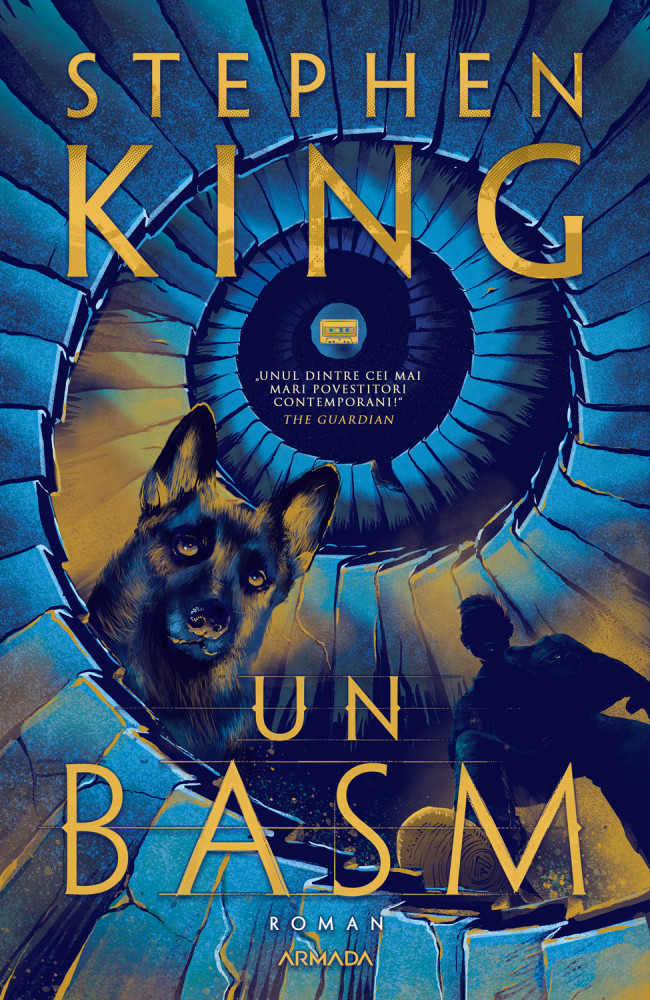
Fairy Tale: Stephen King
A story about grief, healing and the courage to enter worlds that ask more of us than we have. A wounded boy, an old dog and a gate to a realm where fear and hope travel together. Beyond the shadows and magic, King writes about growing up with surprising gentleness.
Read the full review
A review and reflection by Confussius
Introduction
Fairy Tale is one of Stephen King’s warmest and most humane books. Beyond the lights and shadows of an unfamiliar realm, it tells the story of a boy learning to carry a grief too large for his age. Charlie lives among loss, care and a mature urge to put right what can still be repaired.
The book begins in an ordinary world, with a teenager carrying his own wounds: family trauma, the responsibility of a life turned upside down and a silence he does not know how to fill. An old dog and a solitary man change his direction, bringing a thread of light into the story that gradually becomes an adventure of mythical proportions.
A story about healing and taking responsibility
Healing runs beneath the fantasy. Charlie carries his past with him at every step, approaching it in his own time. The magical realm becomes a reflection of his growing up. There, his limits are tested through responsibility, courage and choices with moral weight.
King understands that adolescence is a painful transition. The imagined world extends Charlie’s inner journey. Each ordeal reflects something from ordinary life: fear, guilt, loyalty and the hope that appears even when all seems lost.
Magic, darkness and light
King’s imagined world preserves something familiar from classic fairy tales. Beauty and danger travel together. The realm has scale, rhythm and a mythology of its own. Its weight comes from how the characters inhabit it. There, Charlie discovers fragility and strength in himself and in those he meets.
Choices have consequences in this world, and doing good comes at a price. King uses the language of fairy tales to render reality in a form the heart can understand.
The grief that grows along the way
One of the novel’s strongest elements is the bond between the boy and the old dog. Loyalty, fragility and care intertwine in a story about the pain of loss and the way love endures when the end seems inevitable. King writes about that bond with rare sensitivity and a deeply affecting gentleness, without sentimentality.
Time is a quiet character here too. Part of Charlie’s growing up is learning that time cannot be stopped and that what comes can still be faced with dignity and quiet courage.
The Confussius verdict
Fairy Tale is an adventure about growing up, healing and responsibility. King puts a simple and profound idea on the page. Growing up means learning to carry pain without losing the light you have.
The novel leaves a warmth behind, a sense of balance between darkness and hope, between magic and the reality of a soul trying to become whole.
Recommendation
Read it when you need a story that can touch you gently. It stays with you like a fairy tale told in adulthood.
Confussius
Childhood’s End: Arthur C. Clarke
A story about the end of humanity’s childhood and the strange quiet that follows an irreversible change. Clarke writes about evolution, sacrifice and the price of knowledge beyond our grasp. The novel leaves you with that rare silence in which you realise that transformation always brings loss.
Read the full review
A review and reflection by Confussius
Introduction
Childhood’s End is one of Arthur C. Clarke’s quietest and most unsettling novels. Its power lies in how calmly it announces the end of an age. It captures the moment humanity is forced to grow up and, without a fight, loses what made it human: imperfection, freedom and restlessness.
The story begins with the arrival of the Overlords, towering and apparently benevolent beings who bring peace to Earth. Under their supervision, wars cease, hunger disappears and the world stabilises. Progress is rapid and efficient, with almost no visible cost. Beneath that perfect calm, a deeper change is under way. Gradually, humanity ceases to belong to itself.
A world at peace and adrift
Clarke describes a society that prospers as its character fades. In the absence of conflict, friction or challenge, people become spectators in their own lives. Peace dulls them. Clarke captures the change with an almost painful clarity. Technical progress offers no guarantee of inner maturity.
The novel becomes a reflection on dependence on comfort. Humanity receives everything it wants and loses the very things that helped it grow: restlessness, questions and exploration.
The children and the beginning of the end
The children bring about the real change. They begin to develop mental abilities beyond anything humans can understand. As they merge into a collective consciousness, the boundaries of individuality disappear. They become a single mind, a vast, connected being for whom Earth is one stage in a journey.
Here lies one of the book’s most delicate ideas. Evolution comes at a price. Humanity’s children rise to another level, and biological humanity fades in the process. Its end comes through transcendence.
Clarke describes it without spectacle, as something natural and inevitable. A cosmic silence in which a cycle closes.
Jan Rodricks, the last human witness
At the end, one witness to the old world remains. He observes the transformation from outside it. Through his eyes we see what is left when humanity leaves behind its body, history and traditions. The final pages have a sad, almost poetic beauty. Earth comes apart, the children merge with something larger than any known form of life, and silence becomes the only possible language.
It is the end of a cosmic childhood, beyond any simple judgement of tragedy or victory.
The Confussius verdict
Childhood’s End is a novel about forced maturity, the cost of evolution and humanity’s precarious place in the vastness of the universe. Clarke sets moral judgement aside. With quiet simplicity he shows a world changing until it can no longer be recognised.
The book leaves a gentle melancholy behind, a sense that everything that evolves loses something along the way. It is a meditation on destiny, the limits of the species and the sad beauty of endings that make you look towards something else.
Recommendation
Read it when you have room for a quiet book. Its measured, almost inevitable telling opens up large questions.
Confussius
Explore More Reviews

Film Reviews
Essays that look beyond the screen to explore the emotional life and hidden meanings of films.

Music Reviews
Tracks that tell stories and reflections on the feeling that stays after the last note.