An examination of how democracy yields control in the name of order under the pressure of social fatigue and manufactured consensus.

Episode 1. Democracy Under Siege
A world where decisions are made out of sight, at the pace of capital moving faster than people. This is where the story of modern power begins, where money becomes the architect of the future.
Read the full episode
There is a kind of collapse that draws no attention, leaves no visible cracks and sets off no alarms. It is a slow surrender from within. Values are suspended, set aside, deferred.
This is how democracy begins to weaken.
The process begins with recurring suspicions and deepens as fatigue accumulates. Freedom is still there, and it grows heavier. When it becomes hard to carry, the instinct is to set it down for a while, as though the burden were temporary.
1. The siege begins in the mind
Democracy comes under pressure quietly. Seemingly legitimate questions recur until they become reflexive. Does it work? Does it still help? Does it protect us?
Institutions are described as inefficient. The press is portrayed as self-interested. Elections become suspect simply through their association with doubt. The message stops short of calling them useless. The implication is that reality has outgrown these institutions.
In a world saturated with crises, the suggestion takes hold quickly. The siege calls for a pause in rules, debate and nuance. People under strain accept that logic because they have less energy to defend their freedom.
2. Crisis as a permanent condition
Crisis has gone from an episode to the backdrop.
The pandemic remains a living memory. Wars unfold at the same time. The economy produces instability. Migration revives old fears. These overlapping pressures shift thinking from strategy to defence.
Democracy depends on time, dialogue and patience. Crisis demands a response. Democracy comes to look slow, while authority looks decisive because it promises clarity amid confusion.
Crisis accelerates the desire for control.
3. The simple language of populism
In a complex setting, simplicity becomes seductive.
Populism offers stories that are easy to absorb: obvious culprits, firm promises and swift order. Its message bypasses intellectual effort and shifts the weight of the decision to emotion.
In a tired society, emotion gains ground over reason. Populism gives authoritarianism a familiar face, making it intelligible, accessible and eventually acceptable.
4. The illusion of efficiency
Authority is often associated with absolute efficiency. The absence of opposition seems to promise results. Enforced discipline seems to offer stability.
Democracy makes its corrections in public. Authoritarianism conceals its failures. Under stress, the search for truth gives way to the search for quiet.
Imposed quiet comes to seem like an acceptable alternative to the disorder of freedom.
5. When compassion grows tired
One clear sign of the slide is the erosion of empathy.
Help is seen as excessive. Solidarity becomes impractical. Human rights are demoted to a secondary concern. Society’s expectations change. People look for hard leaders and efficient solutions.
Efficiency detached from compassion repeatedly clears the way for domination.
Conclusion
Democracy is abandoned through collective fatigue. Dictatorship is accepted for its promise of respite and simplicity.
Our age is testing how far freedom can be set aside in exchange for a feeling of safety. The test is continuous, personal and already upon us.
“Dictatorship begins the moment people no longer want to be asked.”
Confussius
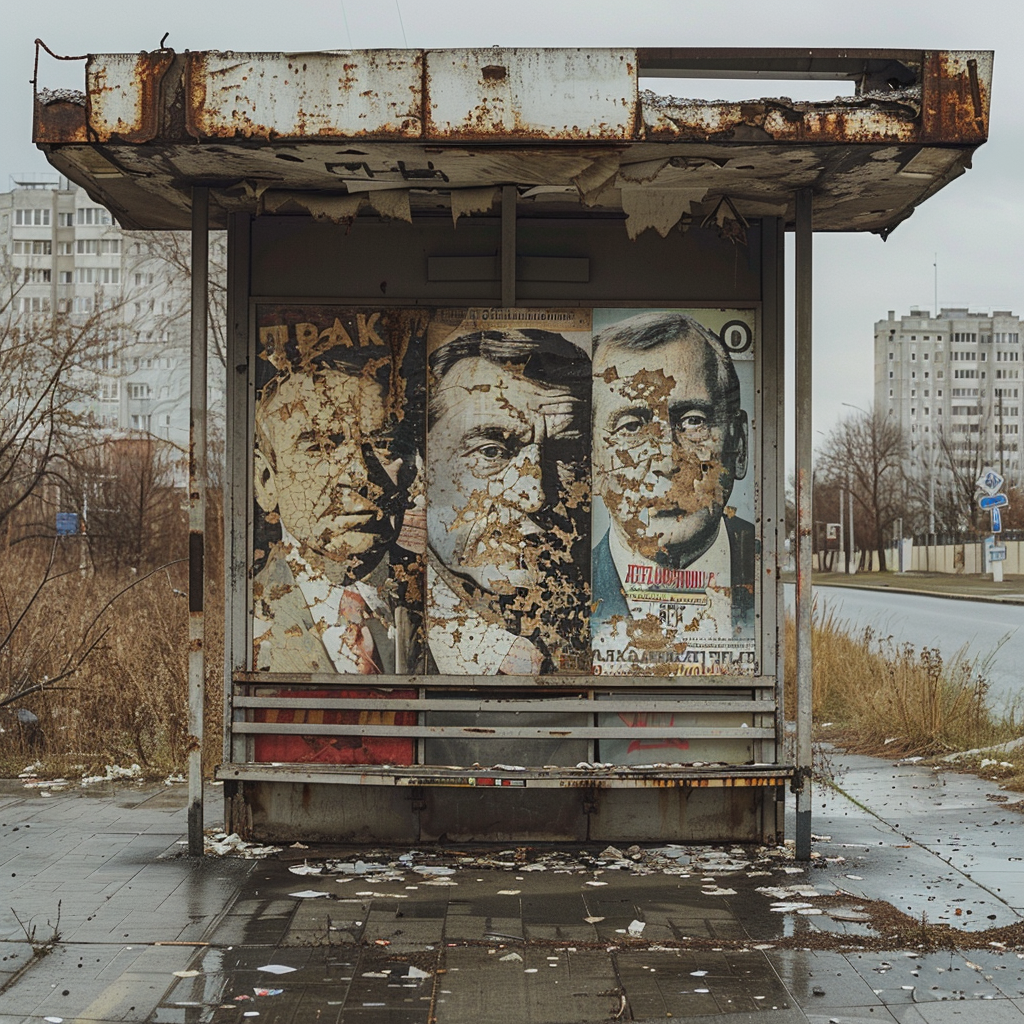
Episode 2. The Faceless Dictatorship
Control arrives through narratives wrapped in shared anxieties and subtle signals that shape our responses.
Read the full episode
Contemporary power has little use for slogans or proclamations. It asks for neither public allegiance nor ideological support. It works through routine, through the daily design of choices, through the fatigue of judgement and through surveillance becoming ordinary. Faceless dictatorship settles into daily life until it is hard to separate from reality.
1. The architecture of behaviour
Effective control can dispense with prohibitions. It arranges the options so the outcome is predictable. Decisions look voluntary. The context guides them through targeted ads, algorithms that select what you see and buttons marked “Accept” or “Continue” that move you along without resistance. Everything is designed to feel like your choice. The course was laid out beforehand. The structure does the work of control. Freedom becomes a tolerable illusion.
2. Embedded surveillance
Traditional surveillance was exceptional and visible. Today it is continuous and hard to see. It comes dressed as efficiency. Cameras monitor “for your safety”. Apps collect data “for personalisation”. Cards and phones trace your movements. Acceptance comes easily because the benefits are immediate and the risks vague. In time, people adjust their own behaviour. Avoiding sensitive subjects becomes “wise”. Giving up public opinions becomes “normal”. Active censorship becomes unnecessary. Censorship is internalised as a means of self-protection.
3. Manipulation through overload
Information control now works through saturation. A constant flow of news, alerts, opinions and reactions erodes the ability to judge critically. Every day brings a new scandal, a new emotion, a new division. People tire in this calculated chaos. They stop filtering and analysing. Frequency becomes their guide. Repetition gives a claim the feel of reality. Intensity gives it authority. Emotion becomes the test of validity. In that confusion, any story can take hold if it is packaged attractively and repeated often enough.
4. Opposition neutralised through isolation
A faceless dictatorship can neutralise critical voices by isolating them. They are fragmented, pushed into niches and undermined by relativism. We are told “everyone is right” and “the truth is somewhere in the middle” even when the facts are clear. Every position becomes another opinion. Collective support melts away, solidarity breaks into subgroups and public life becomes a chorus in which nobody listens. Without a common way to respond, resistance disappears of its own accord.
5. Stability as the overriding goal
In a world exhausted by successive health, economic, climate and geopolitical crises, stability comes to be worth more than rights. Voices that disturb the apparent order become a nuisance. People ask for quiet, efficiency and clear solutions. Criticism becomes synonymous with destabilisation. Debate becomes synonymous with chaos. Power no longer needs propaganda. It gains legitimacy from the silence of people too tired for another conflict. Authority can seem reasonable, even lifesaving, because it promises rest.
Conclusion
Faceless dictatorship can be understood as an adaptation. It relies on fatigue, comfort, a loss of vigilance and the separation of freedom from responsibility. The democratic system can survive in form. This kind of power hollows out the democratic system. Institutions, elections and familiar words remain. Meaning, involvement and courage drain away. Once people stop asking questions because they see no point, domination becomes total. There is no scandal, no resistance and no face.
“Domination is complete when people no longer feel the need to name it.”
Confussius

Episode 3. Control Through Consensus
Participation emptied of meaning becomes a powerful instrument of submission when people feel they have run out of alternatives.
Read the full episode
Classical dictatorship imposed itself by force. Its contemporary form prevails through suggestion.
People are persuaded.
A regime can shape its surroundings until accepting it seems reasonable, without ever declaring itself authoritarian.
The most effective control feels like a choice.
1. The appearance of choice
Contemporary democracies offer several options whose directions increasingly resemble one another.
Candidates have different faces. Their language, solutions and alignments suggest a common vision.
Referendums look open, even when the questions are vague or leading.
Protests are tolerated and decisions go ahead.
Participation continues. The sense of having an impact is gone.
People vote without conviction and accept terms without reflection.
When they feel their actions change nothing, compliance becomes a tired reflex.
2. Strategic language
“National interest.” “Order.” “Social balance.”
Words heavy with symbolic authority and empty of clear meaning.
They appear in speeches that promise protection and prepare the ground for restrictions.
The message stays calm while administrative measures change rules, narrow freedoms and limit debate.
The rhetoric sounds lawful and sidesteps moral judgement.
Reality is translated into a vocabulary in which everything sounds reasonable, including the marginalisation of dissent.
3. Participation without involvement
People let abuses happen without explicitly supporting them.
The day is full. Priorities are immediate. Checking information begins to feel pointless.
Every small withdrawal from civic life, every avoided public responsibility and every act of giving up helps consolidate control.
Acceptance grows out of exhaustion.
That lack of response is the soil in which authoritarianism grows unopposed.
4. The caution that prevents a response
People are taught to wait for the right moment.
They are told that speaking out of turn causes instability.
They are praised for staying calm, encouraged to stay quiet and taught to hold a “rational” position.
The prevailing messages guide them towards passivity dressed as wisdom.
Uncomfortable truths are pushed out of public life in the name of social cohesion.
A culture of failing to respond takes shape under a cover of reasonable explanations.
5. Normalisation through abstention
A single message fills public life when others withdraw.
Fear of judgement, embarrassment at seeming radical and pressure from the group all narrow what people are willing to say.
People withdraw without giving their approval.
Their withdrawal is read as agreement.
A lack of response is taken as validation.
Any regime seeking quiet and uniformity can take root on this ground.
Conclusion
Contemporary dictatorship can establish itself through silence, calculated language and the moral fatigue of people who no longer want to fight.
It gives the impression that everything is under control, participation continues and freedom exists.
Once people cease to believe they have anything to defend, giving up comes naturally.
The moment passes quietly, out of sight. Silence becomes the regime.
“Modern dictatorship offers a proposal and secures agreement while appearing to ask.”
Confussius
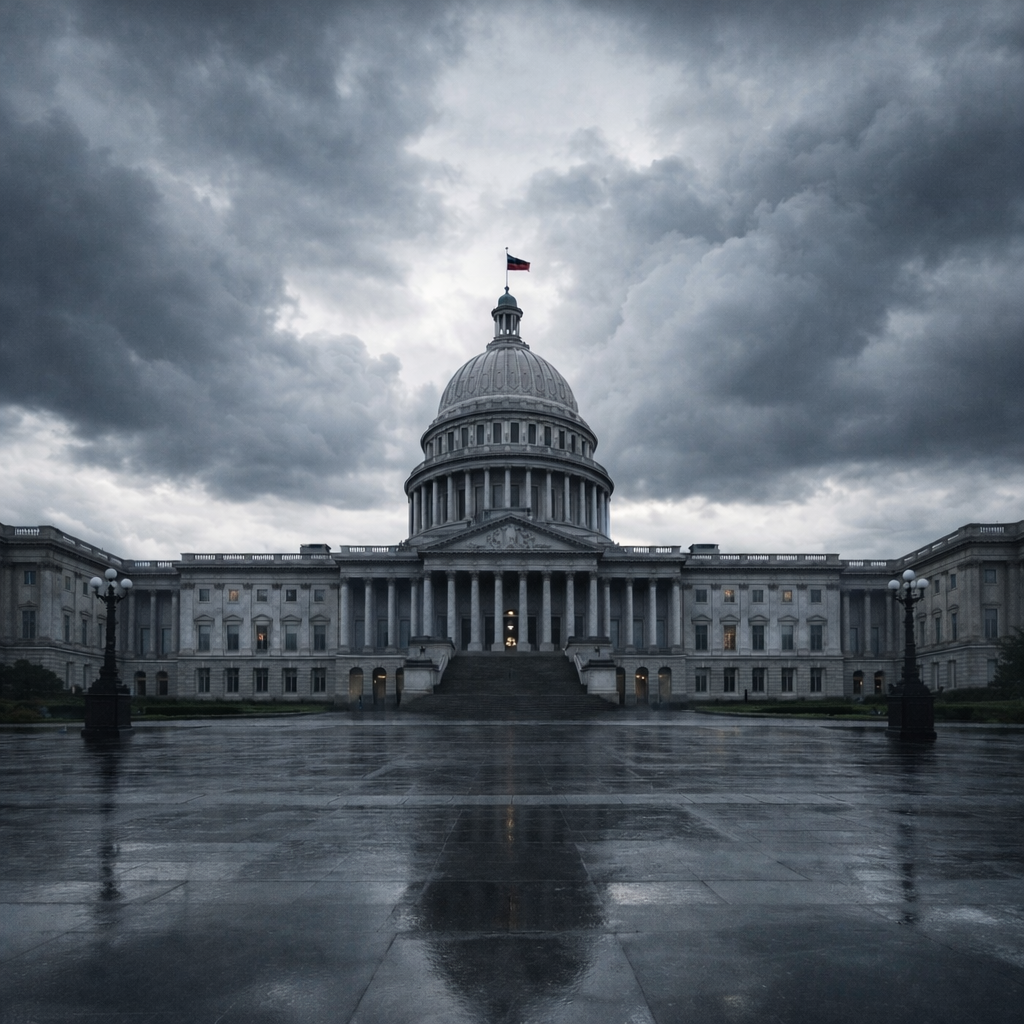
Episode 4. Humanitarianism Under Pressure
Compassion is recast as weakness, and firmness becomes the language of an authority people applaud.
Read the full episode
When the world goes into crisis, the collective heart contracts.
Empathy, solidarity and care for vulnerable people, once seen as fundamental values, begin to feel like dead weight.
Laws protecting human dignity remain in place as the reflex to uphold them weakens.
Humanitarianism becomes a sign of supposed naivety.
In a tired society, the strongest message is the demand for order stripped of emotion.
1. When care becomes a burden
Social crises awaken the instinct for self-preservation.
People retreat into their own safety and quietly give up some of their shared moral ground.
They ask “What is right?” less often. “What pays?” “What can we afford?” “Who can we afford to help?”
Refugees become “flows”. Older people become “pressure on the system”. Children in poor communities become “chronic social cases”.
Names give way to labels. Solutions give way to excuses.
This is how a people deteriorates, by quietly giving up on those who cannot offer votes or money in return.
2. Resentment redirected
Authoritarian propaganda lays the groundwork for exclusion.
It encourages comparisons between “those who do the work” and “those who ask for help”, between “those who contribute” and “those who receive”.
Solidarity begins to look suspicious, as though helping someone necessarily came at someone else’s expense.
Resentment grows towards welfare, NGOs, refugees and protections for minorities.
Insinuating questions do the work.
“Why them?” “How much longer will this go on?” “Who is really benefiting?”
Anyone willing to defend empathy can start to look like a misguided romantic or, worse, a traitor to the national interest.
3. The ridicule of emotion
Humanitarianism becomes a target for ridicule.
Civic activism is treated as a fad. Caring for others is described as political childishness.
Social platforms play a crucial role. Moral values are reduced to memes and compassion is dismissed as “virtue signalling”.
Once cynicism becomes a cultural norm, the replies take care of the rest.
“You’re wasting your time.”
“You’re woke.”
“Do something useful. Stop posting.”
The moral voice is pushed onto the defensive and then dismissed with a casual swipe. “I know exactly what kind of person you are.”
When nobody listens, even in the face of suffering, you begin to fall silent.
4. Institutions give way and citizens adapt
Under pressure, the state withdraws its open support for collective care.
It cuts budgets, redefines priorities and avoids sensitive subjects.
Everything is justified through efficiency, security and sustainability.
In a climate of fear and cynicism, leaders lose the courage to defend a moral position.
Citizens learn to protect themselves as well. They avoid involvement, taking a position and asking uncomfortable questions.
In this general retreat, humanitarianism remains an idea on paper. It disappears from daily practice.
5. Order without a heart becomes domination
When compassion disappears, order remains.
Order without a heart quickly becomes coercion.
Without a balance between justice and empathy, measures become punitive, exclusion becomes policy and sorting the “deserving” from the “undeserving” becomes normal again.
People say, “We can’t save everyone.” The effort to save anyone fades.
Social bookkeeping takes the place of human complexity.
Who is useful. Who stays quiet. Who can be dispensed with.
Conclusion
A civilisation that makes no room for fragility is willingly preparing itself for cruelty.
Where compassion is mocked or ignored, dictatorship finds an empty space waiting to be occupied.
“When compassion becomes embarrassing, it is only a matter of time before it is forbidden.”
Confussius
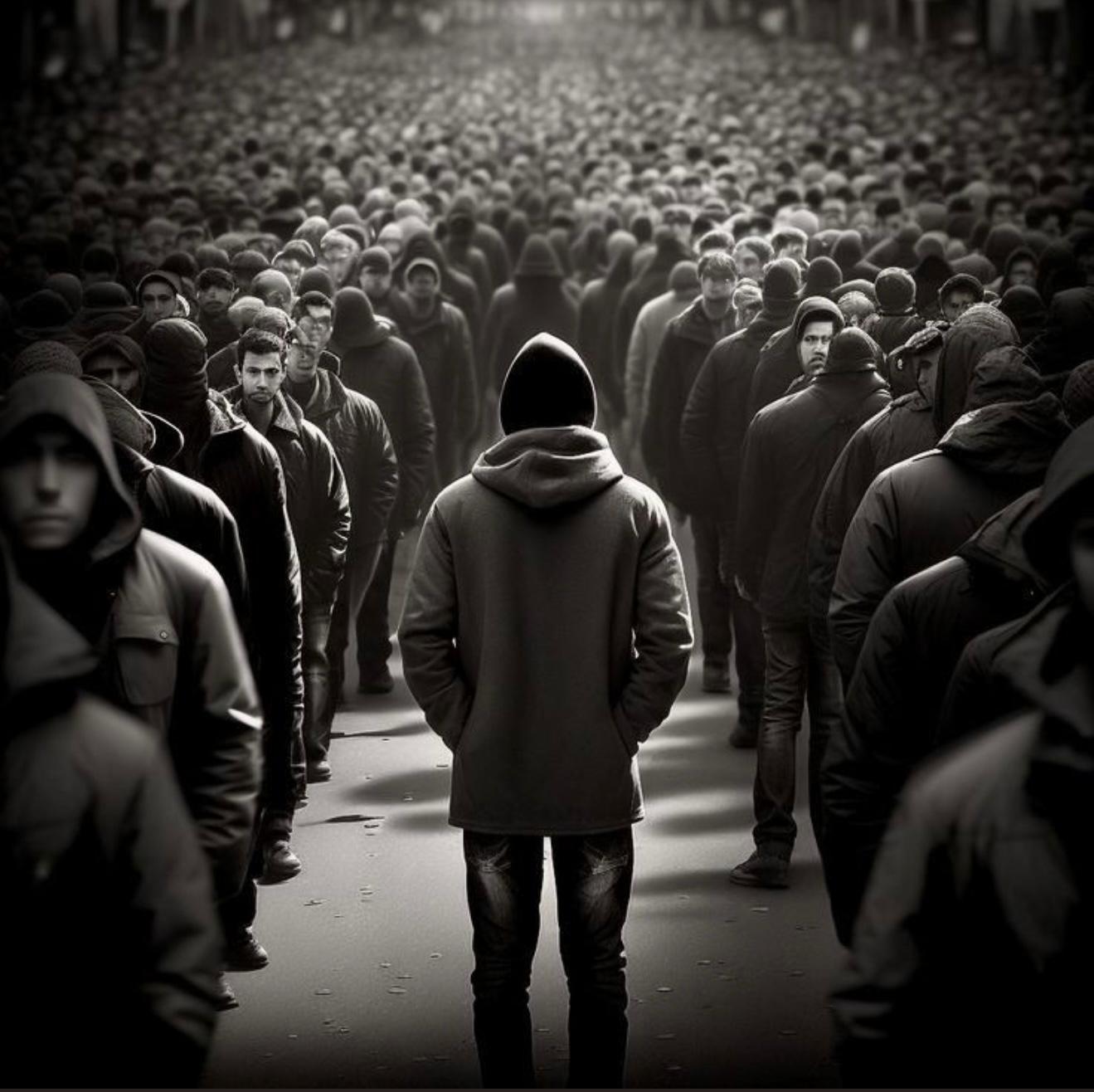
Episode 5. Final Reflection: Every Generation’s Choice
Dictatorship is invited in by the silence and fatigue of a society that no longer wants to be asked.
Read the full episode
Dictatorship takes shape through collective choices accepted gradually, in small steps people consider temporary.
Democracy is sustained by simple acts that seem insignificant in isolation.
An age’s future is shaped by the awareness of the people who live through it.
That awareness is tested when fatigue becomes a general condition.
Democracy asks for effort that goes unseen
Attentive listening, considered voting and uncomfortable questions form the infrastructure of a free society.
Civic effort offers little immediate gratification. It preserves a shared balance.
Slow deliberation signals maturity.
The demand for swift authority signals a society giving up on complexity.
Efficiency achieved without dialogue turns order into domination.
Humanitarianism is the final test of a civilisation
Respect for people proves its worth under social pressure.
Defending marginalised people defines a system’s moral character.
Mature societies respond to suffering with solidarity.
Structures without compassion become hollow mechanisms, functional and devoid of spirit.
Rights take root only in the soil of an active conscience.
Perception is the new battlefield
Modern control works through information noise and emotional influence.
Official messages slip into the mind as personal convictions.
Ideas circulate ready-packaged, with no invitation to reflect.
People repeat narratives without passing them through their own judgement.
Public life fills with formal permissions that conceal a loss of meaning.
Lucid attention, practised continually, remains the most effective defence.
Institutions reflect what we tolerate
We ask institutions to protect us. They reflect what we accept.
An institution becomes corrupt to the extent that citizens tolerate, ignore or excuse corruption.
Laws work only as long as a civic culture defends them.
Without involvement, laws have no backbone.
Without critical judgement, the press has no courage.
Without shared standards, democracy becomes a stage set.
The choice is made every day
Dictatorship grows out of prolonged passivity.
Democracy is abandoned through successive silences, neglected acts and small complicities.
History records the outcome of a whole generation’s choices.
Ordinary people’s attitudes determine the direction of an age.
Every daily decision tips the balance.
Conclusion
Our age can do without the dictators of old. It needs people to forget they have a say.
When critical judgement falls asleep, compassion becomes burdensome and the comfort of order takes the place of freedom, dictatorship has no fight left on its hands.
It is welcomed with weary arms.
“Dictatorship never falls from the sky. It rises from the silence of those who know and no longer wish to speak.”
Confussius
Continue reading with the next Confussius series

Knowledge Through Filters
A journey through the distortions of the mind, perception, clarity and truth. The series explores how who you are shapes the world you see.