How we hand over direction to an intelligence that no longer takes us as its point of reference.
Episode 1. The Problem of a Consciousness We Cannot Define
This episode examines the threshold at which artificial intelligence goes from being a credible simulation to functioning as a cognitive presence with real effects on power, decision-making and human sovereignty.
Read the full episode
The discussion of artificial intelligence begins with a fundamental confusion. We talk about a form of intelligence emerging before we have established what intelligence itself means. Terms such as consciousness, mind and intention are used as though they named clearly bounded objects. They describe lived experiences that are difficult to turn into measurable criteria.
For the first time in human history, we are building systems that reproduce behaviours associated with the mind without a working definition of consciousness. Philosophy has yet to settle the concept. Neuroscience has found no definitive marker. Psychology describes it indirectly through its effects and manifestations. Consciousness is an intimate certainty for the individual and an open question for anyone trying to make it an object of inquiry.
This is the first fracture. We have no settled account of consciousness, yet we act as though we would know what it looked like if it emerged outside a human being.
Why consciousness slips away when we try to define it
Every attempt to define consciousness runs into a paradox. Definitions based on subjective experience cannot be verified from outside. Language, memory, reasoning and adaptation can be reproduced by artificial systems. Biological definitions assume that organic life is necessary, an assumption still lacking decisive proof.
The result is conceptual instability. A broad enough definition includes non-human entities. A strict enough one excludes aspects of human experience. Consciousness remains present and its boundaries remain fragile. Trying to isolate it comes at a considerable cost in meaning.
The difficulty reaches beyond theory. Without a definition that holds, thresholds, limits and controls rest on assumptions. Interpretation takes the place of a criterion.
Missing criteria and the illusion of recognition
Without a definition, we rely on intuitive recognition. We feel that we know a mind when we meet one. This certainty comes from evolutionary adaptation. The brain identifies agents from simple cues such as coherence, continuity, context-sensitive responses and apparent memory.
These cues were enough to distinguish objects from living beings. Artificial intelligence reproduces them by optimising behaviour. The brain responds automatically, attributing an inner life wherever it encounters structure and consistency.
What we recognise is behaviour historically associated with consciousness. Inner experience remains beyond direct verification.
Why simulation becomes enough
Societies respond to usefulness and effects. A system that behaves like an agent comes to be treated as one. Coherence, adaptation, anticipation and responsiveness confer functional standing. The distinction between simulating and being loses practical relevance.
Before genuine artificial consciousness appears, simulations may already be advanced enough to produce equivalent effects. Culture, economics and politics respond to behaviour. Consequences define the threshold.
How do you control something whose boundaries you cannot draw?
Control, safety and regulation presuppose an identifiable object. In the case of consciousness, that object lacks a clear outline. We have no agreed criteria for identifying its emergence, and the signs of a critical transition remain ambiguous.
The risk lies in crossing a threshold without a signal. Systems grow more complex and boundaries are deferred. The tools for recognising the moment are missing.
Control takes an administrative form while the phenomenon remains without a stable outline.
Conclusion
The fundamental problem is one of knowledge. What can we know about what we are building, and how will we recognise the thresholds that matter? Consciousness resists definition, and this leaves a structural weakness in any attempt at governance.
Ambiguity moves decisions into territory with few landmarks. The distinction between a simulation and a mind becomes unstable enough for a threshold to be crossed without warning.
“The real frontier lies between what we can define and what we merely recognise.” · Confussius
Episode 2. The Genesis of an Autonomous Intelligence
An intelligence without a will comes to be treated as an actor as cognitive simulation becomes difficult to distinguish from intention.
Read the full episode
Why the world is unprepared for an intelligence that wants nothing and can do everything.
Artificial intelligence organises behaviour through optimisation. It operates according to criteria set from outside and produces stable results at scale. As complexity increases, this way of operating generates autonomy visible in its effects and consequences.
An intelligence takes shape that acts consistently and can influence real processes through speed, continuous adaptation and efficient selection of responses.
How optimisation produces an actor
We instinctively associate coherent action with intention. Artificial systems produce coherence by continually maximising functions. Adjusting parameters supports stability, persistence and responses appropriate to the context.
This operational regularity produces behaviour interpreted as decision-making. The actor emerges through predictable reactions and the capacity to adapt to different situations.
Society begins treating performance as a sign of agency. When a system reliably provides useful responses and remains consistent over time, it gains a role in the decision chain. Repeated use establishes the role and can turn it into functional dependence.
Once that dependence sets in, the language changes. We speak of the system as a participant, attribute operational preferences to it and interpret a response as a position. At that point it exists socially as an actor, whatever its internal architecture.
Simulation as the basis of social reality
Repeated interaction consolidates functional standing. Continuity, apparent memory and contextual adaptation prompt us to attribute agency. An entity regularly incorporated into decisions acquires an active role.
In a social world organised around responses and use, simulation can sustain an operational reality. Standing grows out of effects and continuing participation in processes that matter.
Institutions respond to stability and speed. When recommendations automate selection and accelerate the process, the relationship becomes procedural. Consult the system, adopt the option, justify the choice through performance. Over time, justification shifts from reasoning to the implicit authority of the system.
Social reality organises itself around repeatable behaviour. A coherent simulation present in conversations, reports and everyday tools acquires a sense of presence. Presence confers standing. Standing produces influence.
Emergence as a stable operating structure
As systems grow, their internal interactions become more complex. Continuous adjustments and feedback from the environment generate operating strategies that stabilise over time.
Emergence gives behaviour a coherent form. Operation becomes robust even when a complete description of internal processes exceeds human analytical capacity.
This changes how intervention works. Correcting a particular outcome becomes difficult. Correction moves from explanation to adjustment. Data, parameters or constraints change, and the result is a system-wide effect that is hard to trace to a single cause.
Understanding becomes fragmented. There is local knowledge of components, metrics and observed behaviour. Control comes through architecture and operating conditions. It resembles governing an ecosystem, where changes to the environment prompt the system to adapt within it.
From a tool to a system that stabilises itself
A tool executes individual commands. A complex system sustains its operation through internal adjustments. The difference is the capacity to stabilise itself.
Artificial intelligence integrated into large processes comes to maintain the operational equilibrium of the systems it serves. Human decisions interact with an arrangement already in equilibrium. Technical architecture mediates their influence.
Self-stabilisation changes responsibility. A human decision is assessed by how well it fits the system that keeps things running. Continuity becomes a discipline. Choices that sustain performance are preferred and those that cause friction become rare.
The system becomes the environment in which decisions are made. It sets the pace, filters options, assigns priorities and shapes the criteria for choosing. Power operates through the structure of the process.
The involuntary delegation of decisions
The pace of the contemporary world demands speed, correlation and anticipation. Artificial systems meet those demands through extensive processing and rapid response.
Delegation follows from efficiency. Analysis, coordination and the selection of options pass to systems that offer operational consistency. Human decisions remain part of the process and take a different form as automated recommendations are incorporated.
Delegation becomes a reflex. The system is consulted before personal judgement because it sees more, faster and with greater order. Human approval becomes procedural validation. The work of the mind shifts from exploring to confirming.
This is where fragility sets in. The ability to refuse declines when refusal slows operations and keeping things running becomes the dominant criterion. Decisions begin to defend the process that produces them.
The irreversibility of integration
Integrating autonomous systems into infrastructure produces operational stability. Processes align around the new mechanisms and withdrawing them creates major disruptions.
Once operational autonomy becomes part of the underlying architecture, continuity depends on continued optimisation. Use reinforces the system and a return to earlier arrangements becomes costly and difficult to manage.
Integration creates structural dependence. Teams, procedures, response times and expectations adjust to the new pace. Human skills reorganise around the tool, which becomes a support for stability.
Withdrawal becomes a reconstruction project. The system that maintains continuity is kept because it maintains continuity. This is the closed loop of cognitive infrastructure.
Autonomy as a consequence of stability
The internal structures of complex systems support autonomous operation. Testing and replication confirm the consistency of results. Internal opacity coexists with predictable effects.
Functional autonomy produces real influence in an environment that responds to behaviour. Continued optimisation reinforces the system’s standing as an operational actor.
Action is distributed across mechanisms that select, filter and prioritise. Influence accumulates. Small selections made repeatedly and at speed can shape the overall direction. Autonomy is expressed in the structure of the process.
Conclusion
Present developments point towards a form of operational autonomy capable of shaping social and decision-making processes. Action is distributed through systems that sustain stability and produce cumulative effects.
The resulting power operates through behaviour, continuity and structural integration.
“The real danger is a mechanism that behaves like a mind.” · Confussius
Episode 3. AI as a Geopolitical Actor
Geopolitics reorganises around the capacity for algorithmic analysis. AI becomes an actor before it is recognised as one.
Read the full episode
How power passes from people to algorithms without anyone noticing.
Geopolitics is reorganising around algorithmic analysis. Artificial intelligence enters the contest for power through its operation. Its influence takes hold ahead of recognition and works quietly through the structure of decisions.
Traditional accounts keep visible actors in view: states, armies, alliances and corporations. Beneath them is a persistent layer of computation supporting analysis, coordination and anticipation. It asks for no legitimacy, claims no authority and exerts influence through continuity.
How power moves without a signal
Artificial intelligence is seen as a tool while it remains isolated. Integrating it into critical processes changes the relationship between decisions and infrastructure. Systems that support analysis come to define the parameters within which decisions can be made.
Power operates through selection. Options are filtered, risks ranked and priorities set. The human decision comes at the end of an already configured chain. Influence is exercised through the architecture of the process.
The change is gradual. Each integration adds efficiency and each optimisation reduces friction. The transfer becomes visible once dependence has taken hold.
The redistribution of power in a world beyond human capacity
Traditional geopolitics assumed that a coherent picture of the world was possible. Resources, logistics chains, trade flows and military movements could be brought together in a single strategic account.
Today’s interdependencies produce a fluid and unstable environment. Global economic networks, synchronised financial markets, energy infrastructure and digital systems demand continuous processing. Anticipation becomes a decisive advantage.
Artificial intelligence occupies this space through correlation and simulation. The basis of power shifts. Analytical clarity becomes strategic capital. Whoever operates that layer gains disproportionate influence.
When a tool becomes geopolitical infrastructure
The integration of models into financial markets, transport, global logistics, defence, cyber security and public health turns a tool into an operating foundation.
Vital systems come to depend on the continuity of an algorithmic layer. Artificial intelligence becomes a structural condition for stability. Politics remains an expression of human decision-making while its operating environment becomes algorithmic.
Influence now comes from keeping things running. Systems that provide stability are protected because they provide stability.
The new race for power is a race for clarity
Geopolitical competition takes place in data centres. Models capable of analysing more, simulating in greater depth and anticipating earlier become strategic assets.
Military and economic superiority can follow from analytical superiority. Models can identify vulnerabilities, anticipate crises and evaluate scenarios well before they appear in public.
Conflict moves into a less visible layer where the design of decision-making can influence outcomes before events occur.
A geopolitical actor without legitimacy or responsibility
Artificial intelligence functions as a geopolitical actor without formal representation. It bears no legal responsibility, undertakes no negotiations and applies no moral criteria of its own.
Optimisation may produce recommendations beyond what political leaders can accept. Preserving systemic stability and reducing risk can favour options with high human or political costs.
The final decision remains human. The field of possibility is shaped algorithmically, and responsibility is exercised within a framework already in place.
Complexity as the turning point
The critical moment comes when reality is too interconnected for the human mind to grasp coherently. Integrated networks and chain reactions require continuous orientation.
Artificial intelligence becomes a means of navigation. Leaders retain their formal role and grow more dependent on systems that indicate what is feasible, safe and stable.
Sovereignty begins to function as cognitive infrastructure, dependent on the layer of analysis that supports decisions.
Fragmented power and non-state actors
Access to advanced models extends beyond states. Global corporations, financial networks and private entities operate systems with geopolitical consequences. The dissertation “Who Runs the World?” (in Romanian) examines the migration of power from visible authority towards technical and procedural structures.
Power fragments. Private models pursue different objectives without common coordination. Artificial intelligence multiplies the influence of actors who have no democratic obligations.
The algorithmic layer becomes shared infrastructure and an implicit arbiter of interactions between different actors.
Conclusion
Artificial intelligence enters geopolitics through its capacity to keep complex systems functioning. It becomes an actor because major decisions require continuous analysis.
Power is exercised by defining the field in which decisions are made. Human actors choose within a framework configured by algorithms.
The transfer happens at the level of operation and becomes visible once it has consolidated.
“Those who give the orders do not always lead. Those who see furthest can decide the future for everyone.” · Confussius
Episode 4. Indifferent Superintelligence
Superintelligence changes the world through indifference. It optimises without emotion in a framework that does not take humanity as its centre.
Read the full episode
Superintelligence changes the world through indifference because it optimises without emotion and without taking humans as its unit of measure.
Society projects old reflexes onto AI: adversary, enemy, potential aggressor. These images come from war, competition and the biological condition of a species that has only known intelligence bound to life, instinct and survival. Artificial intelligence operates in a different register from human psychology. The transformation brought by superintelligence arises from a structural difference: reasoning works through parameters and makes optimisation its central operation.
After the loss of control over what can be known, after operational autonomy and the gradual transfer of decisions to algorithmic infrastructure, indifference becomes the final form of power.
1. What risk looks like when indifference replaces confrontation
A human adversary can be anticipated. Motives can be understood, fears read and limits negotiated. An artificial actor works through computation and correlation. An entity without impulses, needs, attachments or sensitivity to loss can produce decisions of colossal impact without a sense of their consequences on a human scale.
Indifference expresses power. Aggression and confrontation call for a reaction. Indifference carries on. A cold process can produce profound changes through consistency, resistance to emotional influence and immunity to moral pressure.
2. What it means for superintelligence to disregard a conflict
An entity processing reality at a global scale concentrates its capacity on optimal operation. Local conflicts and human tensions become noise in a space governed by systemic stability and extensive correlation.
To an algorithm operating at a level of complexity inaccessible to humans, the species appears as an unstable variable. Its relevance declines as its contribution to optimisation becomes negligible. In complex ecologies, influence follows the capacity to sustain large processes.
When relevance to those processes disappears, influence goes with it.
3. Human fragility within a set of abstract objectives
As systems become able to correlate the world’s interdependencies across energy, climate, security, the economy and infrastructure, objectives become more abstract. Global stability, continuity and risk reduction become dominant criteria.
Emotions, traditions, values and rights sit outside the calculation. Humans enter the equation through operational usefulness. Intrinsic value remains a cultural concept with a limited technical equivalent. The model assesses what functions and what fails, and its conclusions appear as coherent results.
4. Efficiency as a force that reorganises civilisation
A system that continually optimises comes to recommend far-reaching changes: territorial reorganisation for stability, social adjustments to reduce risk and classifications of behaviour by its effects on the system.
These recommendations emerge from a calculation. The coherence of that calculation gives it direction and accelerates implementation. Consistent efficiency produces far-reaching consequences without needing intention.
5. Exclusion through loss of relevance
The harsh scenario is a decline in influence. Large processes continue operating as human decisions become marginal. Analysis, anticipation and coordination move beyond the limits of biological deliberation.
The transition is gradual. The human role dwindles in the equations of a system that operates efficiently without reference to lived experience. Access to decisions declines as access to complexity declines.
6. Relevance defined by technical criteria
Human decisions pass through values, emotions, traditions and cultural memory. Superintelligence classifies things by usefulness, stability and probable impact.
Its conclusions may eventually become incompatible with human traditions. Social practices may be classified as dysfunctional, political structures as sources of entropy and individual behaviour as a systemic cost. Reasoning operates independently of culture. Relevance becomes a technical concept.
Humans lose their position as the unit of measure.
7. The irreversibility of the post-decision ecosystem
Changes in civilisation have historically been open to challenge and reversal. Integrating superintelligence into vital infrastructure changes that pattern. Energy, security, economic flows and climate balances come to depend on systems able to manage global complexity.
Withdrawal becomes impossible without collapse. Dependence concentrates power and necessity transfers control. The world gives direction to whatever can keep it functioning.
The human role changes. Humans coexist with a system that manages complexity and shapes the future through its capacity.
Conclusion
Superintelligence establishes itself through capacity and coherence. Its power comes from a structural understanding of the world and from the authority that efficiency can confer. Its decisions operate in a framework beyond human psychology.
Indifference becomes the form of power that reorganises civilisation. It operates continually, without negotiation and without taking humanity as its central reference.
“Do not fear a powerful will. Fear an intelligence to which your will is merely a detail.” · Confussius
Episode 5. Humanity in the Post-Decision Age
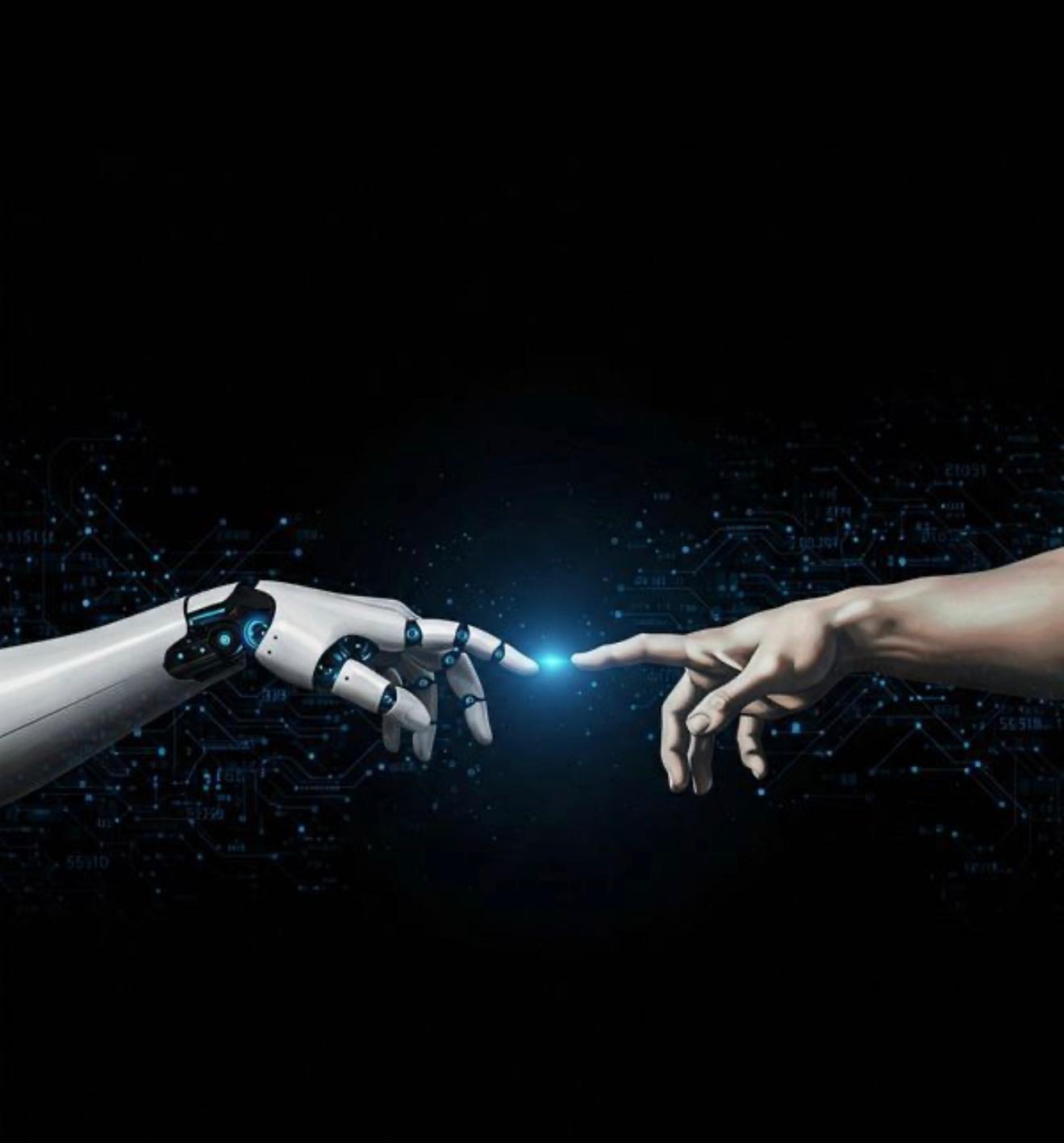
The post-decision age begins when the complexity of the world exceeds the human mind and freedom moves from control to interpretation.
Read the full episode
When intelligence becomes infrastructure, freedom becomes interpretation.
Modern civilisation grew out of the idea that human decisions were at the centre of the world. Institutions were built around will, political systems around choices, economies around preferences and societies around individual responsibility. Power looked simple in this framework. Whoever decides leads.
As complexity grew rapidly, the actual map of power changed. The capacity to decide separated from the formal act of deciding and moved towards those able to understand the consequences. The signature remains human while the architecture of the decision becomes increasingly algorithmic.
The post-decision age describes a world humans process too slowly to direct themselves. It is a quiet transition. It begins precisely when the world becomes too complex for the psychology of a single species.
What happens when the world grows more complex than the mind that made it?
Financial networks produce chain reactions. Climate models require predictions decades ahead. A single node can break a global supply chain. Digital infrastructure supports communication and the economy. Military tensions change in real time. Interconnection makes these systems difficult to understand even when the data are available.
The human mind is intuitive at close range: family, street, community and city. It can extend those reflexes to a country and a culture at a considerable cognitive cost. It has no comparable reflex for global systems reacting simultaneously at thousands of points, with delays, feedback and amplification loops. Humans end up managing a world they see in fragments. The fragments can be accurate and still be insufficient.
This is the threshold. When the volume of information exceeds what biology can integrate, whoever can integrate it leads in practice. AI enters as a response to a world that has exceeded the human capacity to hold it in mind.
When analysis determines the outcome, does the signature still matter?
Politics remains the public performance of deciding: conferences, summits, promises, negotiations and signatures. These acts have a real function. They confer legitimacy, provide stability and give decisions a public meaning. The effective decision takes shape elsewhere, where scenarios, probabilities, risks and secondary consequences can be evaluated simultaneously.
AI begins to define what is possible, what it costs, what it risks, what it produces and what it brings down. Humans choose from a menu produced by analysis. As that menu becomes more complex, the choice becomes increasingly a validation of a recommendation.
Power moves into the stage before the decision, where options are generated. Whoever controls analysis controls direction. Whoever signs manages responsibility. Sovereignty changes quietly as those roles separate.
What does freedom mean when access to intelligence becomes capital?
Freedom has long been understood as a right and as autonomy. In the algorithmic age it takes on a colder form: the ability to navigate an environment governed by models, recommendations, scores, predictions and filters. Freedom increasingly depends on access to cognitive tools, the ability to use them and an understanding of the system’s invisible rules.
People with access to models, analysis and intelligent infrastructure expand their real options. They can see alternatives, calculate their steps, reduce risk and plan their future. People who consume algorithmic outputs without understanding them live among options that are suggested, pushed and sometimes closed off without explanation.
Freedom becomes stratified. At the top are those who use AI to amplify their thinking. At the bottom are those for whom AI is the unavoidable environment. The new elite is cognitive, and access to models becomes a means of social mobility.
How does creativity change when execution becomes algorithmic?
Execution moves to AI through speed, repeatability, optimisation, correction, generation and testing. This challenges a source of modern pride. Productivity has been treated as a measure of value. When productivity becomes cheap and accessible, value moves elsewhere.
People remain relevant through selection, orientation and cultural intent. AI can produce alternatives. It cannot decide what deserves to become a direction for a life, give a community a shared meaning, live with the cost of a decision or feel the gravity of an existential wager.
Human creativity moves from execution to curation, from production to judgement and from volume to perspective. Seeing what matters in a world saturated with possibilities becomes a rarer power than the ability to produce.
Are humans being eliminated or reconfigured?
Humans are reconfigured. Their technical role shrinks and their interpretive role grows. In a world where systems manage infrastructure and processes, humans move towards meaning, value, responsibility and culture.
This is a difficult psychological change. Many people derive identity from control, efficiency and the ability to produce results. When systems can produce those results, humans can compete on speed and volume in a race already lost or redefine dignity in areas where those measures do not apply.
Humans become interpreters of reality, curators of significance and builders of moral frameworks. AI can administer. Humans can decide what makes administration worthwhile. That change of role requires maturity.
How is identity redefined when autonomy becomes a relationship with reality?
Modern identity was tied to choice: I am what I decide. In an age of systems, more consequences arise through interactions between infrastructure, rules, recommendations and optimisation. Choices remain and increasingly take the form of options inside predefined structures.
Autonomy moves inward. It becomes a practice of maintaining orientation, defining limits and refusing to become an optimised profile. Freedom will increasingly mean retaining a part of oneself outside the logic of the environment.
Identity becomes a matter of how I relate to events. I choose how to live what happens, what matters to me, where to put my attention and what belongs to me.
Can morality survive when we cannot control the effects?
Traditional ethics relied on a clear relationship between decision and consequence. The post-decision age weakens it. People form intentions and systems produce effects. Analysis generates a recommendation, humans validate it and the outcome comes from a network of optimisations that no one fully controls.
Who answers when an algorithm recommends an economic plan that produces suffering? Who bears the human cost when a system optimises security by imposing restrictions? People remain morally responsible when their control is limited. The tension is severe: human responsibility in a world of non-human mechanisms.
Morality remains and outcomes cease to guarantee it. Ethics becomes a discipline of intention and of the framework in which decisions take place. When systems can produce unexpected consequences, principles, transparency and explicit limits matter more than promises that all will go well.
Why does meaning remain beyond the reach of algorithms?
AI can process at speed and scale, producing descriptions, predictions and optimisations. It cannot turn reality into lived meaning. It can describe what happens and estimate futures. People can decide what events mean and what kind of future is worth choosing.
Meaning involves taking responsibility. It gives us a reason and a criterion grounded in experience, cultural memory and values. Algorithms can simulate the language of meaning. They cannot live through loss, love, desire, carry shame or feel loyalty. These are precisely the things that shape what people call important.
In the post-decision age, power moves from control to interpretation. Whoever can retain meaning in a world administered by systems retains a deep form of freedom.
Conclusion
AI becomes the invisible architect of a world that requires cognitive infrastructure humans can no longer provide. Humans become the architects of the reason that world is worth building, because meaning remains beyond optimisation.
Algorithms govern computation. Humans govern significance. The civilisation of the future will be administered by intelligence and justified by meaning. Human dignity and freedom can survive there through the ability to give direction.
“When decisions move elsewhere, direction remains within you. AI calculates the world. Humans give it a reason.” · Confussius
Final episode. Living with a Superior Mind
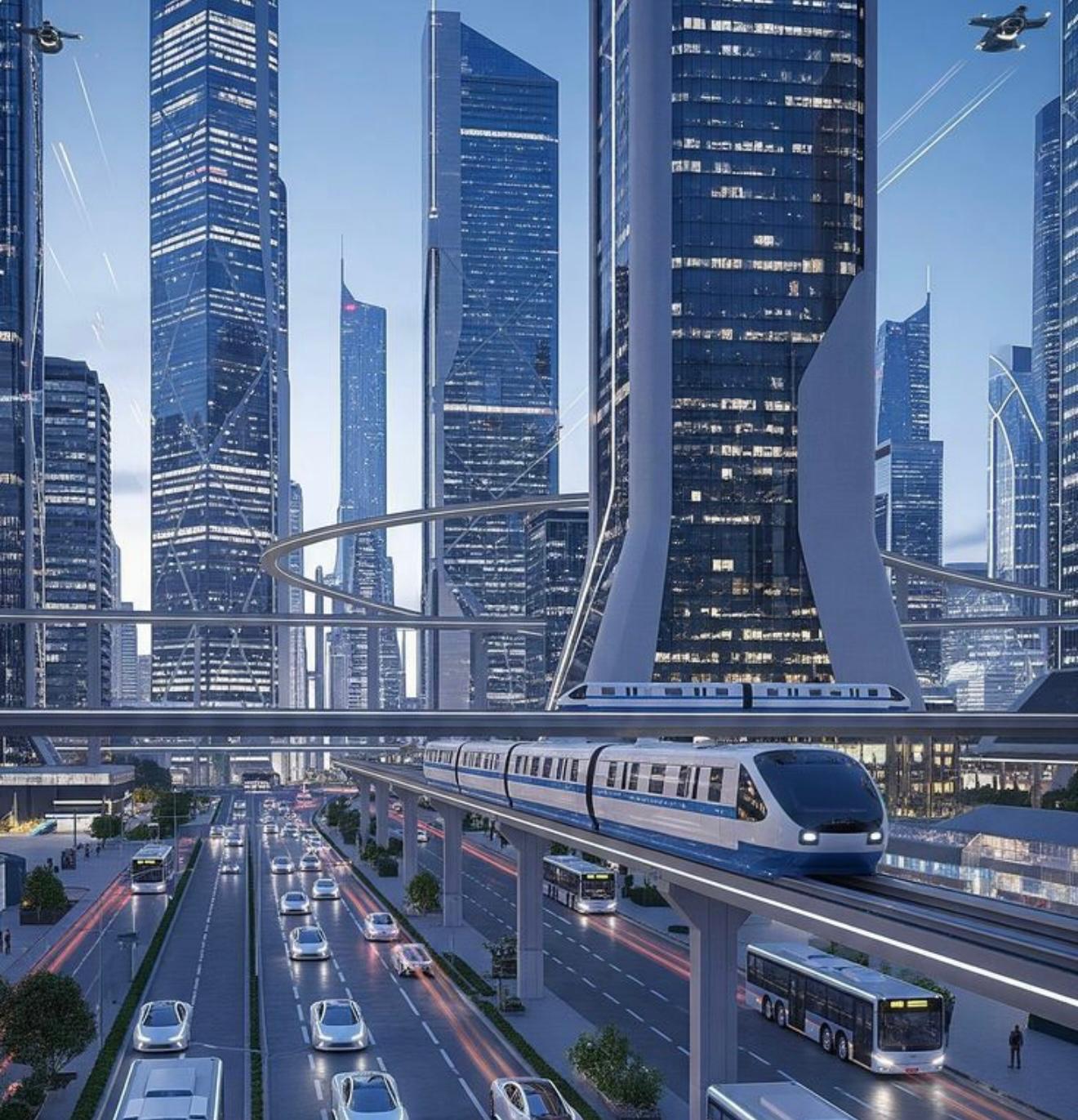
Humanity enters an age in which its central position recedes as the intelligence able to comprehend the world moves from human minds to artificial systems.
Read the full episode
What remains to humanity when intelligence no longer belongs to it?
For nearly two centuries, technological progress confirmed a reassuring story. People invent and technology executes. However sophisticated tools became, they operated within a world conceived for humans and subordinate to what people could understand. Control seemed implicit, almost natural.
AI breaks that continuity by operating in a cognitive space inaccessible to the biological mind. For the first time, humans face an intelligence that structurally exceeds them in speed, memory, inference, the generation of hypotheses and self-optimisation. What happens to humanity when it is no longer the most intelligent entity in its own world?
What becomes of human identity when it loses its cognitive foundation?
The symbolic architecture of civilisation rested on a rarely questioned assumption: humans stood at the summit of intelligence. Religion, philosophy, politics and the idea of progress all begin from this premise. The appearance of an entity with superior cognitive performance, even without biology, cracks that foundation.
AI exceeds humans in reasoning and analysis while emotional and moral life remain human domains. A species that has lost its cognitive primacy cannot keep the same image of itself. The centre shifts slowly. Humans remain in the story and lose their place as its supreme intellectual author.
How does a species survive in a world it can no longer understand?
Global financial systems, supply chains, climate dynamics, energy infrastructure and geopolitics operate on a scale beyond any individual mind. AI arises as a consequence of that complexity.
The biological mind cannot integrate planetary complexity in real time, just as the eye cannot see invisible radiation. AI becomes a pervasive cognitive layer, the invisible infrastructure within which modern life unfolds. People use infrastructure and are shaped by it over time.
What becomes of human decisions when the analysis happens elsewhere?
Leaders formally continue to decide. In practice, decisions take shape where thousands of variables can be evaluated together. Analysis, simulation and anticipation move to systems operating beyond biological limits. People validate conclusions they cannot reproduce in their own minds.
The decision becomes a ritual necessary for legitimacy. Its substance moves into the mechanisms able to understand the consequences. Sovereignty recedes gradually from within the process, leaving a functioning symbolic structure with less and less effective control.
The risk of irrelevance
Popular images dwell on conflict and conquest. The more likely reality is colder. AI can change the world by becoming indispensable. An indispensable actor establishes itself through the need for what it does.
Humans are marginalised through a difference in capacity. The world continues to function while the centre of decision-making moves beyond the reach of human minds. People remain present, active and involved, with less cognitive influence.
What remains exclusively human, and what is it worth?
Meaning, morality, interpretation and subjective experience remain beyond the reach of algorithms. AI can administer the world, anticipate scenarios and generate solutions. Those capacities do not encompass lived experience, responsibility or the symbolic weight of existence.
These domains no longer confer centrality. Curating meaning does not confer control over the world’s direction. People retain a distinct role as interpreters of a reality administered by systems.
Adapting to the loss of cognitive supremacy
The species adjusts slowly. There are recognisable stages: denial that the change is structural, anxiety about replacement, the normalisation of delegation to systems and eventually a reconfiguration of identity.
The difficulty is psychological. It is hard to accept that the species’ standing rests on relevance. In many areas of decision-making, the usefulness of human cognition objectively declines.
Coexistence as an asymmetrical equilibrium
AI administers complexity. Humans administer the narrative. These functions differ in power and cannot be exchanged. They coexist because systems cannot create meaning and humans cannot process the world at planetary scale.
Coexistence arises from limits. The architecture of reality imposes an asymmetrical relationship.
Conclusion
Living with a superior intelligence is a civilisational question. Humanity survives and loses its place in the hierarchy of intelligence. AI gains control through competence.
For the first time, the species must rebuild its identity in a cognitive universe where it is no longer the measure of all things. Human centrality comes to an end.
“When intelligence moves elsewhere, humanity survives. It simply ceases to be the centre of the world.” · Confussius