On the unseen structures that influence global decisions and shape our lives.
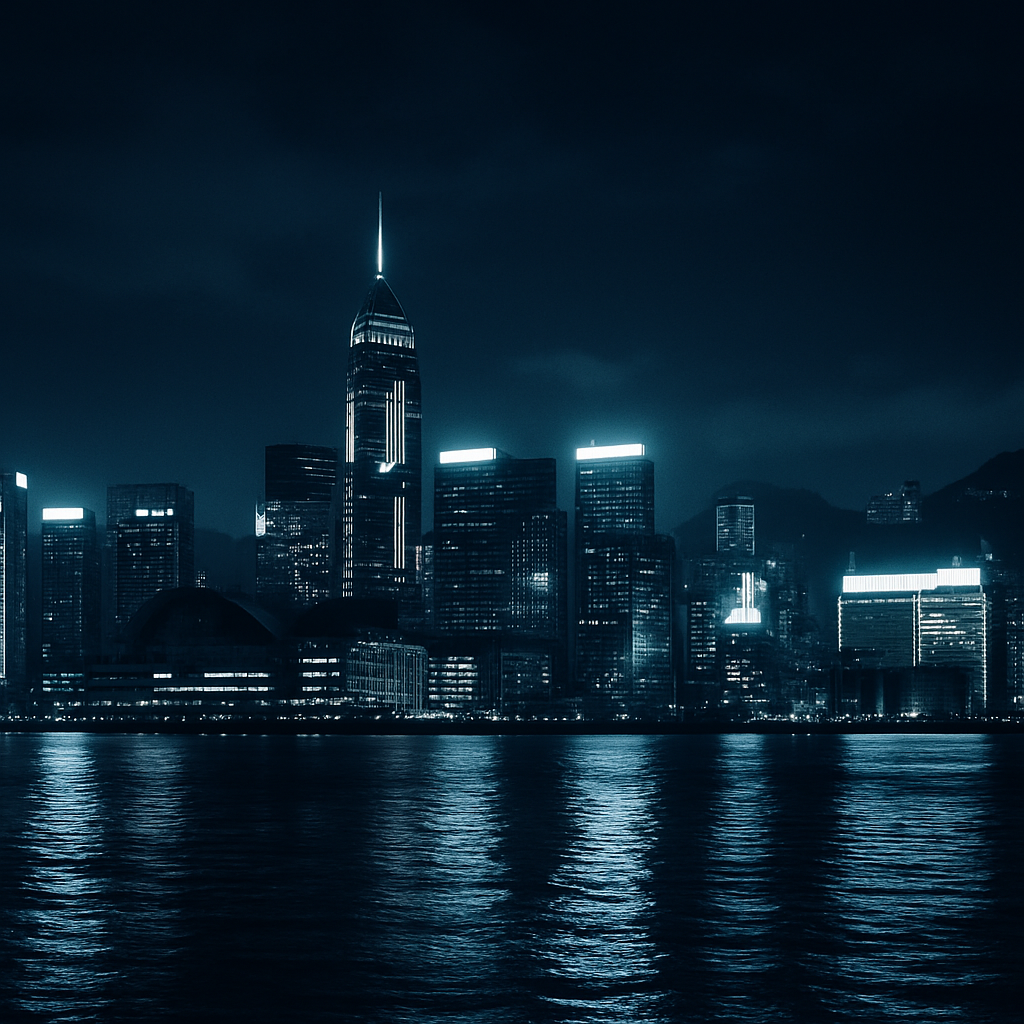
Episode 1. The Birth of Global Financial Power
Decisions are made out of sight, at the pace of capital that moves faster than people can. The story of modern power begins where money became the architect of the future.
Read the full episode
Introduction
You live in a world shaped by decisions you never voted on, by people you have never met and by systems you cannot see. Every price, every job, every crisis and every supposedly inevitable change can be traced to a point nobody shows you.
Modern power has grown quieter. It no longer needs to issue orders or parade itself. It circulates, changes hands, goes into hiding and multiplies, influencing everything you experience without leaving an obvious trace.
This series looks at a cold reality. Who makes the major decisions in the world you live in, and why does it seem that nobody has control over them?
To understand what follows, we have to go back to the birth of global financial power. It grew out of the pursuit of efficiency.
1. Capital as the starting point of a new world order
Industrial economies built corporations capable of accumulating capital on a scale that states could no longer match. Once capital could be invested, withdrawn and moved across the globe at speed, the balance of the world changed.
Money began to move faster than laws, and power followed the speed. A company could leave a country in a matter of weeks. Legislation took years to catch up.
The first layer of modern power emerged from that asymmetry.
2. The deregulation that opened the gates
In the 1980s and 1990s, governments eased financial controls, made mergers easier and gave corporations room to operate across borders.
States wanted growth. Corporations wanted flexibility. Investors wanted returns.
Each got what it had asked for. The centre of gravity quietly shifted from public institutions to economic actors able to alter global balances without approval, debate or a democratic mandate.
3. The giant funds that shape the direction of the world
BlackRock, Vanguard and State Street. Three names that remain largely unfamiliar to the public despite their importance to the workings of the system.
They hold large stakes across energy, technology, healthcare, media, logistics, banking and manufacturing. Their influence over votes, strategies, corporate direction and boards comes through their holdings, while the companies manage their own operations.
Their influence follows from the arithmetic of ownership. When you are present across every industry, your decisions become part of the world’s infrastructure.
People feel the effects in prices, jobs, crises and trends, with little sight of what produces them.
4. The globalisation that amplified everything
Globalisation bound the planet into a dense network of dependencies: cheap production in one place, vast consumption in another, low taxes in strategic ports, extremely fast transport and instant relocation.
Capital thrived in this environment. Laws apply locally. Money moves globally.
States work through procedures. Capital moves on impulse. In this contest, impulse always wins.
5. Profit as the single filter for decisions
Profit has become the central criterion by which modern society is organised. Education, healthcare, culture, public services and work are all assessed in terms of efficiency and return.
That is how the structure works, whatever the intentions of the people within it.
When profit becomes the compass, every other value recedes. A person becomes a segment, a category, a metric, a point in a dataset. This is how the global system operates.
Conclusion
Global financial power quietly replaced the arrangements that came before it. Influence is now measured by the structures that make decisions on everyone’s behalf. Intentions count for less.
Episode 2 looks at the next layer, where economic and technological power came together to create mechanisms that can no longer be stopped.
“Power grows where people think nothing is happening.”
Confussius
Episode 2. The Logic of Consolidation: The Inertia of Economic Giants
On the unseen force that makes large structures almost impossible to stop and concentrates the world in fewer hands.
Read the full episode
As capital accumulates, a simple and often misunderstood phenomenon appears. Large structures cannot stand still. Once a company reaches a certain scale, its way of operating leaves little room for neutrality. Its own mass pushes it forward, regardless of what anyone wants.
To understand why fewer and fewer entities run the world, you have to understand this logic. There is nothing secret or magical about it. It is the inertia of a large mass once set in motion.
1. Growth follows directly from size
Large structures operate according to dynamics that are invisible to individuals. Once capital reaches a vast scale, internal systems demand speed, predictability, stability and control.
Those demands create pressure, and pressure drives expansion. A large enough company cannot simply stay where it is. Its own weight forces it onward.
2. Optimisation becomes the language of power
The greater the resources, the more impersonal the decisions. Everything comes down to cold questions. Where can we cut costs, raise margins and eliminate risk?
This calculation takes on a life of its own and tends towards maximum efficiency. Maximum efficiency demands expansion. Stagnation means loss, and loss makes a company vulnerable to being absorbed.
3. Consolidation makes the world smaller
In saturated markets, organic growth becomes impossible. Mergers and acquisitions follow, and competitors disappear. Conglomerates, megacorporations and alliances that operate across national borders emerge from the process.
On paper it looks like a series of improvements. The result is an economy concentrated in fewer and fewer hands.
4. Those who can afford to play shape the rules
Expansion brings new regulations, procedures and strict standards. On the surface they look like progress. For small players they can become enormous barriers.
Who can put these rules into practice? The firms with the resources and the incentive to do so. The market is indirectly shaped by those large enough to survive the conditions it imposes.
5. Control comes as a by-product
As a company expands, it comes to control prices, supply chains, suppliers, distributors, data flows and access to markets.
Control follows from scale, whatever the original intention. When you hold the infrastructure a world depends on, every move becomes a decision with global consequences.
Conclusion
The concentration of power is a process. Once a structure crosses a certain threshold, the way it operates pushes it to grow, absorb, consolidate and control.
Giants run the world because they have grown beyond the point at which they could operate any other way.
“Power expands because its own mass cannot stand still. Winning is beside the point.”
Confussius
Episode 3 looks at states on the defensive and the confrontation between political authority and capital. The world changes when money becomes mobile and laws stay fixed. That is where the conflict between global capital and the nation state begins.
Episode 3. States on the Defensive: Political Power Under Pressure from Capital
A look behind the systems where politics negotiates and capital decides. An imbalance of speed and power that shapes your life without warning.
Read the full episode
For decades, public debate has rested on a reassuring fiction: states run the world and corporations obey the law. The balance has shifted. The state is left with responsibility, and capital holds the power. The gap shows up in everything you experience: prices, taxes, wages, stability, crises and sudden reforms.
The relationship becomes clearer once you see how the two systems work. States are slow by design. Capital moves quickly because that is what it does. When the two operate at different speeds, the faster one wins.
1. States move slowly. Capital moves instantly.
States take time to debate, consult, vote, follow procedures and implement decisions. Each law passes through political, legal and institutional filters. That time is built into the system.
Capital works on a different plane: algorithms, reactions, repositioning and financial flows. While the state spends months studying a question, capital can move billions in an afternoon.
The difference has direct consequences. Economics sets changes in motion and politics responds. Citizens experience the effects as sudden changes nobody explains.
2. Laws are local. Capital crosses borders.
States are bound to a territory, its borders and the population they govern. Each decision runs up against a physical limit: the border.
Capital operates globally. It follows lower costs, cheap resources, lower taxes and permissive laws. It moves without a passport, vote, referendum or public justification.
That is the first major fault line. The state has to protect its citizens. Capital has to protect its efficiency. The two aims coincide rarely and briefly.
Industries leave, jobs disappear and prices soar. Mobility explains much of it. One side can leave. The other has to stay.
3. Politicians depend on the economy more than it depends on them
A government without economic growth is politically vulnerable. Budgets depend on taxes, taxes depend on economic activity, and activity depends on capital.
Capital negotiates through figures, returns, margins and scenarios, away from television cameras. Power takes shape where the risk is financial and elections are irrelevant.
That is where pressures develop out of public view: lobbying, treaties, memoranda, tax exemptions and so-called strategic programmes. The state has little leverage over the market, which can punish a government.
Capital moves out, investors pull back and ratings fall.
4. Crises hit the state. Capital moves around them.
In a crisis, citizens turn to the state for help, subsidies and security. The state redistributes, cushions the shock and pays the bill.
Capital leaves the area of risk, changes position and waits for the right moment. That is how large funds can get out before households feel the collapse.
The state is left with the shock. Capital keeps its liquidity. The asymmetry is built into the structure, regardless of moral judgement.
5. The imbalance shows up in daily life
Elections, debates, promises and programmes give the impression of a political direction. In the background, capital reshapes conditions according to efficiency, with little regard for ideology.
Wages rise slowly and prices rise quickly. Taxes exert downward pressure while benefits are bargained upward.
The state tries to stabilise conditions and capital optimises them. Citizens become the measure of a conflict they cannot see. They feel the effects in less time, less money and less stability. The cause stays out of view.
Conclusion
Political power is left to make its case and absorb social pressure. Economic power keeps its speed and its ability to decide. In an accelerating world, states struggle to compete with an actor that operates worldwide, moves instantly and faces no electoral constraints.
You feel that in the plainest terms: money, time and stability.
“When laws stay put and money moves, power changes hands.”
Confussius
Episode 4 looks at the person reduced to a number. The individual becomes a data point in a system designed to optimise, with no capacity for empathy.

Episode 4. The Person Reduced to a Number: Life in a World Governed by Efficiency
Episode 4 opens the most uncomfortable part of the series, when efficiency becomes the universal criterion and people are treated as parameters.
Read the full episode
For years we have been told that technology makes life easier, digitisation simplifies things and modern organisation optimises processes. The logic of efficiency that governs corporations is now being applied to people. Once optimisation becomes the criterion, dignity becomes a cost.
In a world where capital moves faster than the state and algorithms move faster than capital, the individual becomes the slowest part of the system. A world governed by efficiency treats whatever is slow as a problem.
The consequences become clear when you look at the machinery itself. Under the logic of efficiency, a person becomes a parameter.
1. Work becomes a metric
Who you were at work used to matter. What counts now is what your chart shows.
Performance is measured in KPIs, response times, conversions, rates and thresholds. That extends far beyond corporations, into healthcare, education, public institutions and services.
Where a person sees effort, the system sees a percentage. Where a person sees stress, it sees non-compliance.
When work becomes a spreadsheet, the person becomes a row.
2. Productivity eats into personal time
Phones, apps, automated booking and platforms all promise efficiency. Whose efficiency?
The system optimises your day to get more out of you. Convenience is how it sells the arrangement. Your time becomes a resource it can exploit.
You end up living in a world where every minute has to justify itself.
3. Your data is worth more than you are
Everything you do leaves a trace. Everything you are becomes a profile.
Preferences, locations, purchases, histories and reactions are collected, sold, cross-referenced and turned into predictive models.
Efficiency turns the person into an algorithm. The system shows you what you should want before it ever asks. It steers you without needing to persuade you.
4. Emotions are treated as departures from the norm
In a system built for optimisation, emotions get in the way. People tire, hesitate, make mistakes, feel fear and get angry.
Algorithms are free of those responses. The temptation is to replace people wherever possible.
Efficiency is only part of the appeal. Algorithms feel nothing. They raise no questions and ask for no meaning.
In a world that demands precision, people become an expensive, unpredictable option.
5. Identity is reduced to usefulness
When every system measures you, every institution quantifies you and every platform profiles you, your public identity comes down to a single cold question.
What use are you?
Burnout, pressure, anxiety and the feeling of never being enough follow. The strain comes from how the world is organised.
A system that treats the individual as a resource produces exhaustion. Living people have limits.
Conclusion
A world governed by efficiency turns people into numbers, metrics and resources. Decisions are organised around optimising flows, leaving the common good behind.
Where usefulness becomes the highest criterion, humanity counts as a loss.
You feel that consequence in your own life, in your time and in your energy.
“When usefulness becomes the measure, the person becomes a result.”
Confussius
Episode 5 looks at emerging technologies and how the parallel powers of the modern world come into being. We continue.
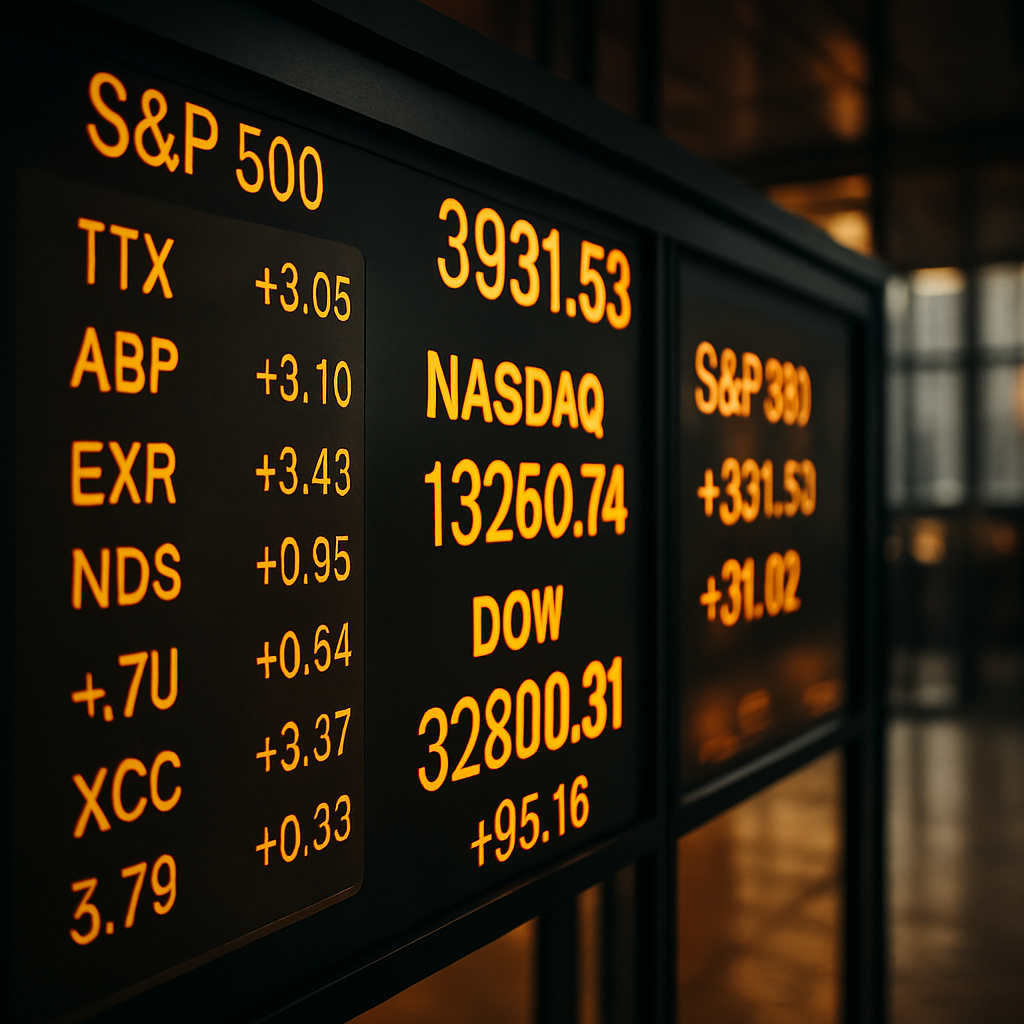
Episode 5. Emerging Technologies: Structures Beyond Institutional Control
Where does money go when the world can no longer control its movement? This episode looks at how parallel markets and the invisible powers of technology take shape.
Read the full episode
Power has already moved into finance, where flexibility, rapid adaptation and structural change are routine. The shift goes further. Markets are splitting into parallel infrastructures, and a growing share of money moves outside the official system, out of sight, unregulated and impossible to stop.
Crypto, blockchain, financial AI and markets that never close are cracks in the old order. Through them the world is quietly taking a different shape.
1. Crypto: money beyond the authority of the state
Cryptocurrencies are the first monetary mechanism that answers to no decree, central bank, border or political authority. Bitcoin operates as an infrastructure built to resist shutdown, censorship and counterfeiting.
Stablecoins are the world’s parallel currency: global dollars that can be sent anywhere at any time. For millions of people, they are more useful than state-issued money.
The state controls currency. Crypto controls mobility.
2. Blockchain: trust without an institution
Blockchain is conceived as a ledger that cannot lie. It requires no court, notary, bank, authority or arbitrator.
The network validates the record. For the first time, trust comes from a technical process independent of political authority.
That erodes an old monopoly over who owns what, who sets the rules, who validates transactions and who defines property.
Slow institutions cannot compete with a global, open ledger designed to resist manipulation.
3. Financial AI: decisions without a human operator
In modern markets, AI makes decisions itself.
Algorithms run strategies around the clock, react in microseconds and move capital at speeds no human institution could match.
Traditional funds move at the speed of a merchant ship. AI moves at the speed of an electrical signal.
Power shifts to systems that never tire, panic or negotiate.
4. Tokenisation: when everything becomes a digital asset
Tokenisation can turn property, shares, licences, works of art and rights into financial instruments. Each can be divided into fractions, transferred and made liquid.
Traditional markets lose their monopoly. Conventional intermediaries become redundant. Global access can bypass banks, states and local registries.
The physical world enters the digital flow.
5. Around-the-clock markets and the end of political time
Crypto never sleeps. AI takes no weekends. Technology keeps running through institutional breaks.
States are tied to a calendar. Technology operates continuously.
When a market never closes, political rules become scenery and the difference in pace is enough to erode control.
Conclusion
Emerging technologies break apart the old structures of power without taking their place directly.
They move ahead without waiting for permission, submitting to states or asking institutions to validate them. They break monopolies, redirect flows and accelerate a world that is splitting in two. One side is visible, regulated and slow. The parallel world is autonomous and digital.
The next century will be decided along that fault line.
“When the world moves without pause, power passes to those who never tire.”
Confussius

Final Episode. The Verdict: The Future of Power in a World Without a Centre
The final episode looks at what lies ahead when capital, technology and power change roles. It offers a direction without illusions or promises.
Read the full episode
The world is approaching a point at which capital, technology and the state can no longer operate at the same pace. Power is being redistributed across several competing systems.
For the first time, a single lens is inadequate. The future has to be understood as a collision between three structures: global money, autonomous networks and institutions trying to keep up.
From that tension emerge the possible directions of the world to come.
1. Cold centralisation: capital becomes the skeleton of the world
If the present course continues without a break, global capital will become the infrastructure on which the economy and public institutions depend.
- Large corporations act as the planet’s economic ministries.
- Giant funds shape markets as if they were algorithms.
- States become administrators of a game they no longer initiate.
- Public policy becomes a set of automatic procedures for carrying out decisions.
Order without freedom. Stability without belonging.
Technical prosperity comes with existential insecurity. People feel financially secure and at a loss for meaning.
2. Fracture: the world breaks under its own weight
A structure that grows too large becomes vulnerable. The world already rests on a paradox. Capital optimises and society responds unpredictably.
A break could come from any of the following.
- Cascading financial crises
- Geopolitical instability
- Technological failures
- Social tensions the system cannot absorb
- Breakdowns in global supply chains
Once the difference in pace becomes too great, the system breaks before it can adjust.
Power settles somewhere different, with no guarantee of improvement. A new form of control emerges in place of a return to the classical state.
3. Transfer: technology becomes the new invisible centre
This is the most likely scenario. Technology absorbs the power it once helped exercise.
AI, blockchains, round-the-clock markets and autonomous digital infrastructure are building a system that keeps moving without slowing down, asking for approval or depending on election cycles.
Power moves into faceless structures.
- AI becomes the arbiter between states and markets.
- Digital networks become political infrastructure.
- Crypto becomes a parallel money supply.
- Decisions are made inside systems no institution can stop.
The world becomes predictable and leaves little room for negotiation. People have to bargain with systems that apply absolute standards of efficiency. Capital itself is no longer the party across the table.
Final verdict
The future belongs to systems that can operate without fatigue, interruption or slowdown. Wealth, traditional power, states and corporations all come up against that capacity.
Modern power is a matter of speed. It has no face, no centre and no one to answer for it.
People remain caught between institutions that move slowly, capital that moves quickly and technology that never stops.
For the first time in history, the pace of the world has become more powerful than the people who live in it.
“When speed becomes law, people become spectators.”
Confussius
Continue reading with the next Confussius series

Knowledge Through Filters
A journey through mental distortions, perception, clarity and truth. Explore how who you are shapes the world you see.