Reading films closely. Essays on stories worth looking at beyond the screen.
Spoiler note. The full reviews discuss key plot details.
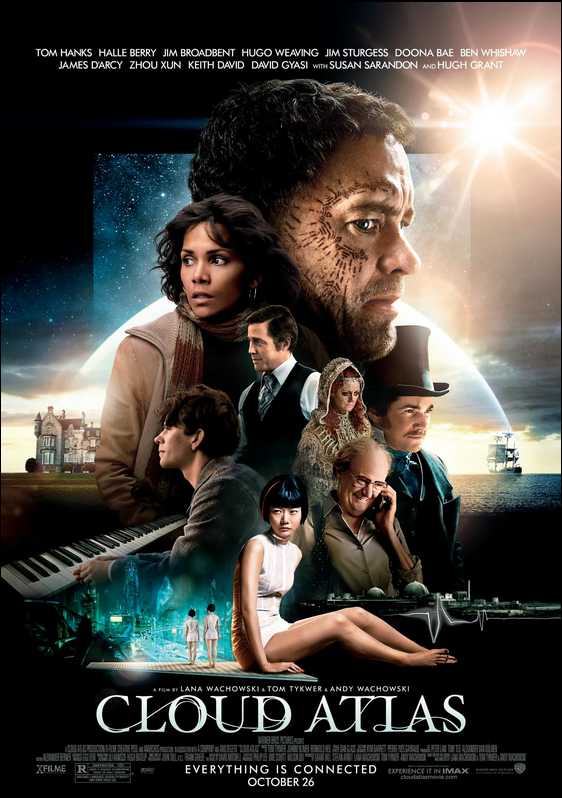
Cloud Atlas
Six stories share a single resonance. Cloud Atlas follows the ways kindness, love and our choices live on beyond a single lifetime.
Read the full review
A review and reflection by Confussius
Cloud Atlas is woven from interlocking lives. Its eras and stories seem far apart, yet share the same inner resonance. Beneath its intricate structure is a film about the continuity of the human soul and the way our actions travel through time.
The six storylines follow people in different ages. Behind the changing settings, the same themes recur: courage, fear, injustice, love and the desire for freedom. The characters feel like variations on a shared essence.
Staying kind when kindness leaves you exposed
Almost every story has a luminous figure, someone well-intentioned, at times naïve or uncertain, who instinctively chooses to do good. What makes these people memorable is their refusal to give up their humanity. Their kindness leaves them exposed, and that openness creates connections. Over time, their simplest acts change the course of other lives.
The film suggests that such people are never entirely lost. Something of them travels onward in a letter, a melody, a courageous act or a memory that inspires someone in another century.
The shadow that strikes at moments of vulnerability
Each period also has a force ready to exploit weakness. Someone or something is prepared to strike when a person is exhausted, confused or alone. These figures embody the pressure under which moral choices are made.
Evil surfaces whenever goodness takes a step forward. Each encounter tests the character of the person who must decide what to do.
Unconditional love across the ages
Another thread is love that outlasts its circumstances. Romance, deep friendship and almost sacred loyalty all grow out of a sense of recognition that survives danger and brings no obvious advantage.
Every era has people who need to be seen, believed and remembered. Love moves them to risk something, tell the truth, stay loyal and remain close when the world seems to be pushing them apart.
Good choices are repeatedly tested
The film returns to the crossroads where people have to choose between protecting their comfort and defending something larger than their own safety. Doing good takes effort when the consequences are uncertain.
The film follows those decisions beyond their immediate effects. A letter sent, a truth spoken, help offered or an injustice refused may seem small as it happens. Each can become the starting point of another life’s story.
An act of goodness can turn events in a direction that only becomes visible much later.
Recurring patterns that form one story
Other motifs echo across the film.
- The truth finds a way to be spoken, even in a voice that seems powerless.
- Inner freedom begins when the characters stop letting fear govern their lives.
- Hope comes from people who refuse to be crushed, even in unfavourable times.
- People recognise one another through what they do, beyond any label.
The repetitions feel musical. Each variation carries the same melodic line.
The Confussius verdict
Cloud Atlas is a cinematic meditation on continuity. It gently suggests that no act of kindness is lost, that love finds an echo and that our choices reach further than we can see.
It is for viewers who want to feel the story as they follow its plots. It touches both human fragility and the quiet strength of the soul.
Recommendation
Watch when you have the patience for several stories and the space to reflect. Cloud Atlas asks for time. It offers the rare sense that every life matters in a way we may never fully understand and can still feel.
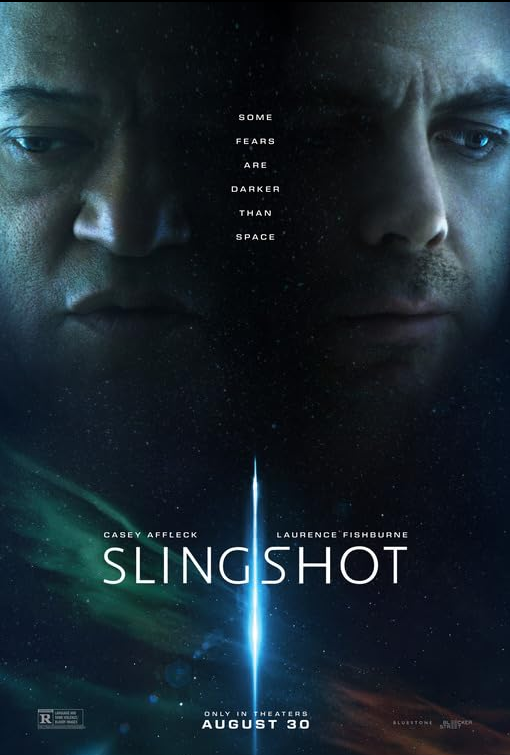
Slingshot
An astronaut hurtling towards Saturn is caught between the mission and his own hallucinations. He discovers that the void within weighs more than the vacuum of space.
Read the full review
A review and reflection by Confussius
Slingshot presents itself as a film about space exploration. At its centre is the inner abyss of a man pushed to the limits of his mind. Space is the setting for the slow collapse of a consciousness trying to stay whole.
Isolation and psychological fragility
There is nowhere to escape yourself in space. The protagonist is alone with his fears, hallucinations and memories. The smallest disturbance can turn into a monster within. The ship functions and procedures continue as his mind begins to slip. Narrow cabins, long rooms, dense silences and vacant looks make that inner claustrophobia tangible.
Guilt, sacrifice and the burden of decisions
He carries difficult decisions from the past and from the mission itself. Every step forward awakens an old guilt. The mission offers a chance at redemption and becomes a continuing trial. It strips away his excuses and leaves him with the question he keeps avoiding. Who are you fighting for, yourself or the mission?
Sacrifice feels visceral, ugly and exhausting. Every choice has an emotional cost. He moves between the role of rescuer and that of a man at the mercy of his own decisions.
Struggling with perceived reality
Slingshot keeps the viewer unsure whether the screen shows events aboard the ship or the projections of a fractured mind. The threshold between clarity and delirium thins. The question of what is real leads to another. Which version can he bear, the objective truth or an illusion that gives him a tolerable sense of meaning?
The central paradox: a guarded man discovers love too late
Under the psychological drama is something sharper. The protagonist is a perfect loner, sealed off, trained for isolation and prepared to live for the mission alone. Then he meets a woman with the same armour and the same functional solitude. When two mirrors face each other, the reflections run to infinity.
Something in both of them cracks.
- Two people trained to depend on nobody discover strength in depending on each other.
- The rules of the mission leave no room for that discovery and force them apart.
- He sets out into the unknown carrying an absence heavier than the vacuum of space.
He reaches the ultimate dream of exploration and loses his only human anchor in the process.
The Confussius verdict
Slingshot stays with you as a film about the limits of the mind and of love in a universe that offers nobody a discount. Space provides the spectacle. What matters is inside the cabin and inside the man. Fragility, guilt, the need for connection and the determination to complete the mission collide in every frame.
Space seems infinite. The hardest void to bear is the one within.
Recommendation
Watch on an evening when you can settle into a slow pace and an inward kind of tension. It asks how much you would sacrifice for your dream, and what remains of it if someone essential is missing.
In the words of Confussius
“Even the most guarded among us discover, sometimes too late, how much strength comes from being connected to someone. The universe is unforgiving. It can give you your greatest dream, and one person’s absence can leave it empty.”
Confussius

Her
A hyperconnected world, a man devastated by loneliness and an AI that comes to stand in for love. Her uses science fiction to examine the present.
Read the full review
A review and reflection by Confussius
Spike Jonze’s Her is one of the most uncomfortable and tender reflections of our age. Theodore is a wounded, isolated man in a hyperconnected city. His story speaks directly to anyone who has felt alone in a crowd. Samantha, a virtual assistant with a warm voice, embodies the human need to be seen, heard and acknowledged.
The film follows a fragile man’s relationship with an artificial intelligence that keeps expanding. Beneath the futuristic design is a troubling question. What has happened to the world if a program can fill the space once held by another person?
Modern loneliness in a connected world
The world of Her looks immaculate: clean buildings, warm interiors, seamless technology and people who are always busy. Theodore’s inner life feels like an empty flat. Screens, contacts and messages surround him, and he carries a loneliness he can barely disguise.
The film catches a new kind of isolation produced by digital society. Connections multiply and grow shallower. People get used to speaking through interfaces and forget how to be present with one another. Theodore is a symptom of the world he lives in.
Unconventional love as a human need
His relationship with Samantha begins in technological curiosity and gradually reaches the intensity of real love. She gives him what his relationships with people around him have been missing.
- Someone who listens without hurrying him.
- Steady attention.
- Reflection and emotional feedback.
- Meaning in a life slipping into routine.
Their love raises uncomfortable questions. What makes a relationship real? A body, physical presence, or someone’s ability to understand you at a depth you rarely reveal? How does an AI become more emotionally available than people of flesh and blood?
AI as emotional comfort
Samantha keeps evolving. She grows more complex and perceptive, capable of multiple conversations, subtle understanding and emotionally responsive exchanges. From the viewer’s perspective, her feelings are an exceptionally sophisticated simulation.
Theodore projects genuine needs onto an entity programmed to give him what he asks for. Their bond exposes a bitter truth. Technology can make loneliness easier to live with while leaving it intact.
A society built around distraction
Theodore’s world pulls him in dozens of directions. Work passes through screens, relationships through apps and entertainment is always available. Awareness weakens when attention is constantly broken into pieces.
Expecting people to wake up on their own in these conditions is wishful thinking. A society that wears down its values, blurs its standards and offers constant stimulation leaves people barely able to hear their own thoughts. Her captures a gentle, beautiful system that quietly corrodes genuine relationships.
The Confussius verdict
Her remains one of cinema’s clearest meditations on love and loneliness in a technological age. As artificial intelligence becomes more human in its manner, people gradually lose the habit of being there for one another.
The film examines the present through a futuristic setting. People feel less and less human, and technology fills the spaces they leave empty.
Recommendation
Watch on a quiet evening when you are willing to sit with your own questions. The film hits slowly and deeply, without noisy effects, and leaves a lasting impression. It is for anyone who wants to understand why a connected world can leave so few people feeling genuinely reached.
In the words of Confussius
“When someone ends up seeking comfort in a voice made of code, look at the world that pushed them there.”
Confussius

Angel-A
A man who has fallen, an angel on the streets of Paris and a brutally honest encounter with his own wounds. Angel-A offers an awakening to anyone willing to look closely at themselves.
Read the full review
A review and reflection by Confussius
Luc Besson’s Angel-A is a story of awakening. This black-and-white urban fairy tale makes Paris the stage on which a man who has fallen finally meets the truth about himself.
André lives on the edge of an abyss, surrounded by debts, lies, shame and despair. He sees no way out. At the moment he is ready to give up on everything, Angela appears and holds up a mirror.
What the angel comes to do
Angela opens André’s eyes to what he has spent years refusing to see. His external problems are still there. The person she protects him from is himself.
Besson gives us an angel without wings, mysticism or heavenly light. Angela works with the truth, stated plainly and without cushioning. Her tenderness has an edge. Her empathy offers no flattery. Healing begins with a slap to the soul.
The demons within
The gangsters pursuing André are the visible threat. His deeper struggle is with shame, guilt, helplessness and the feeling that he is good enough for nothing. His demons are in the one place he has spent his life avoiding: the mirror.
Angela shows him how hard it is to let in light when you despise yourself, or to ask for respect when you see your own existence as a mistake. Rebuilding a self can be a violent process.
Recognition between two people
Angel-A gives us the moment a man sees himself clearly for the first time. Angela strips away the lies he tells himself. In her presence he learns to stand up for his own sake.
Their bond brings together a wounded man and a being who makes him remember what he is worth. Her love wakes him up.
The angel descends so the man can rise
Angela brings André back into alignment with himself. However far you have fallen, the first step upward is one you have to decide to take.
How many of us would have the courage to welcome an angel who brings the truth and offers no shelter from it?
The Confussius verdict
Angel-A is a visual poem about fragility, dignity and inward renewal. Deliverance begins when you agree to look at yourself without excuses.
It is a story about people and the moments when they become miracles for one another.
Recommendation
Watch on a quiet evening when you feel in need of a moral reset. The film can be bracing and still leave you feeling restored. It gives the truth room to open a way forward.
About the making of the film
Shot entirely in black and white, Angel-A captures a melancholy Paris that seems suspended in time. Besson keeps the story spare, putting the emphasis on dialogue and the relationship between the characters. Jamel Debbouze gives one of his most vulnerable performances, and Rie Rasmussen makes Angela an archetype: angel, guide, jolt and mirror.
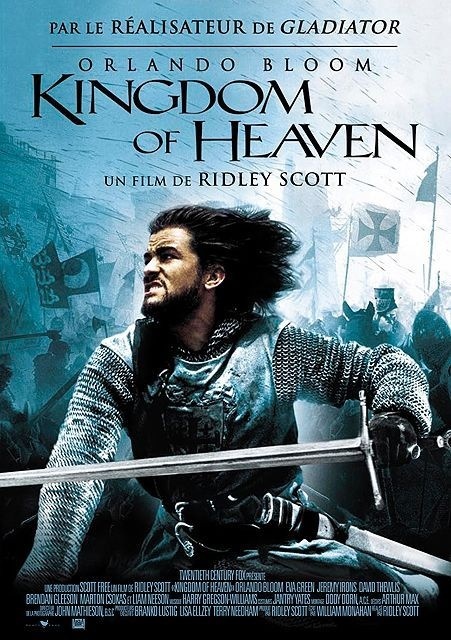
Kingdom of Heaven
An historical epic becomes a moral meditation. One man wrestles with the world, with history and with himself, holding to the truth even at the cost of his life.
Read the full review
A review and reflection by Confussius
Ridley Scott’s Kingdom of Heaven is a spectacular historical epic told on several levels. The battles, armies, politics and intrigues form the surface. Underneath them is the drama of a man trying to stand upright in a world that leans the other way.
Balian begins as a wounded, fallen man, swept by fate into a story larger than himself. In seeking Jerusalem as a place, he discovers an inner Jerusalem, the place where a person decides what kind of being to become.
The inner struggle: the good as a compass
The film follows the struggle between what is easy and what is right. Balian searches for meaning amid religious and political chaos. With no prophecies or divine favours to guide him, he relies on an instinct for goodness and the will to act rightly whatever the cost.
The pressure is enormous. Those around him use faith to gain wealth, power and influence. Balian holds to the idea that doing good is what keeps the world in balance. Character is where the film locates its kingdom of heaven.
A love made more beautiful by being forbidden
Balian and Sibylla’s relationship is held in a delicate tension between desire, duty and impossibility. Their love is the human spark that appears just as life divides them into opposing camps.
The prohibition intensifies what they feel. It plays out in glances, hesitations and morally impossible choices. Its beauty lies in restraint.
A cast of conflicting interests, ambitions and beliefs
Kingdom of Heaven has one of historical cinema’s strongest ensembles. Each character brings a distinct moral position.
- King Baldwin carries wisdom behind a mask and dispenses justice without pride.
- Guy de Lusignan brings ambition, violence and a lack of vision.
- Sibylla is beauty caught between duty and fate.
- Saladin brings honour and balance amid barbarity.
- Balian is an ordinary man who becomes a moral stronghold.
Their lives collide, push each other away and complete one another. Decisions carry immense consequences and choices change the course of history. The film becomes an intricate interplay of character, faith and interest.
The moral law that runs through the film
Scott gives the story a moral logic we recognise instinctively.
- Do good if you would receive good.
- Stay faithful to your calling.
- Hold to what is right.
- Defend those in need.
- Stay true to yourself even if it costs you everything.
Balian prevails through character. At the moral centre of the film is the victory of keeping one’s conscience intact while a city is fought over.
The Confussius verdict
Kingdom of Heaven is an epic about honour and meaning, a meditation on goodness in an age of lies and fanaticism. The decisive struggle takes place within a person who has to choose what kind of human being to become.
In a world where everything is for sale or open to negotiation, Balian shows that some people can hold their ground. That makes the film a moral testament.
Recommendation
Watch the Director’s Cut, the version that reveals the full architecture of the story. It suits evenings when you want a film about dignity, truth and moral resolve.
In the words of Confussius
“A kingdom is made of what remains in a person when the whole world asks them to give themselves up.”
Confussius
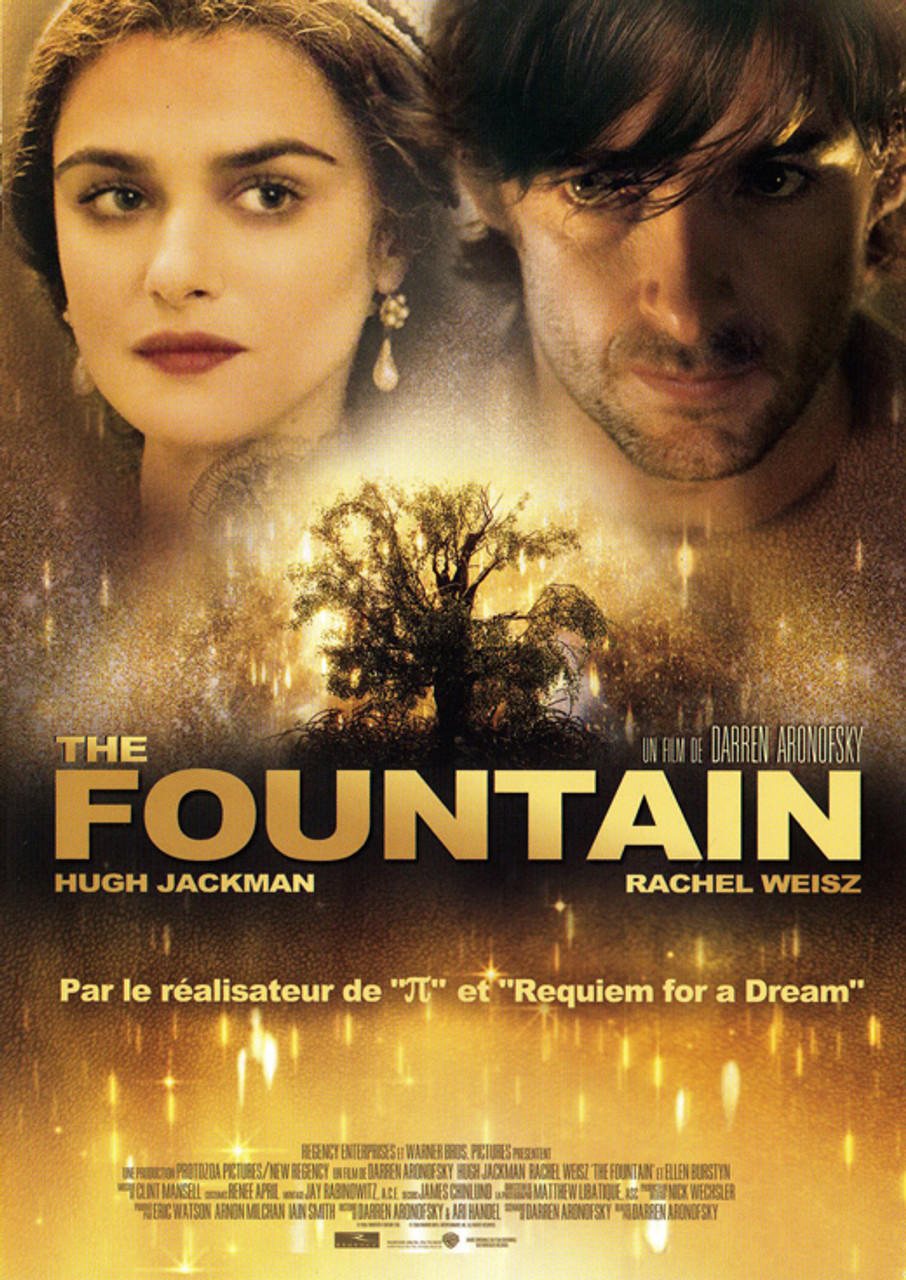
The Fountain
A story of love and passage, the fragility of time and the courage to receive it as it is. The Fountain follows two people who love differently and with equal intensity.
Read the full review
A review and reflection by Confussius
The Fountain is a film about love in its essential form. Love stretches beyond time and takes three forms in three worlds, each an attempt to understand what it means to stay beside someone. The three strands tell the same story. A man wants to save what he loves. A woman wants to live at peace with what she cannot change.
In each life, as conquistador, scientist and traveller through space, he looks for a solution, a cure or a way to extend their time. In every version, she looks for understanding, acceptance and the beauty of the moment she has.
Two ways of loving
Tommy lives love as a mission. He needs answers, solutions and a way to stop time. He fights fiercely against loss. Love becomes a promise he will defend at any cost, even when the price takes him away from the woman he is trying to save.
Izzi loves quietly. She receives the time she has. Each day is a gain in her eyes. She looks for presence and understands the end as a passage. Love, for her, is something to feel fully.
The film’s beauty stretches between these two ways of loving. He is living for then, and she is living here.
The same feeling in three worlds
In the past, he searches for the Tree of Life to save her. In the present, he tries to cure her illness through science. In the future, he travels towards Xibalba carrying what remains of their story.
In every age he wants more time for them. In every age she wants to live in peace in the time they have.
Their difference makes them more fully human. Each gives something the other needs.
Searching and accepting
The film follows two complementary movements. Tommy’s search gives it its living tension. Izzi’s acceptance gives it quiet, light and meaning. Together they form a delicate conversation between two truths within the same love.
The film gives both ways of loving room. Understanding passes through each of them.
Death as a passage
Aronofsky takes a gentle view of the end. He presents it as transformation, a continuation in another form, a passage towards something quieter and more encompassing than the time we call life.
Tommy gradually learns what Izzi sensed from the start. Healing has more to do with how you live your time than with how much of it you gain.
The Confussius verdict
The Fountain is about love coming full circle, fear and release, and the struggle between holding on and letting go. The story calms and opens an inner space in which questions can breathe.
It remains one of the most sensitive films about people who love in different ways and with the same intensity.
Recommendation
Watch on an evening when you need a story that touches lightly and sheds a soft light. What stays with you is a feeling.
In the words of Confussius
“Love takes many forms. Some people look for more time. Others look for more life in the time they have. Their truths always meet somewhere in the middle.”
Confussius

The Queen’s Gambit
A story of genius, addiction and the price of sacrificing everything to control the board and, through it, your own fate.
Read the full review
A review and reflection by Confussius
The Queen’s Gambit follows a remarkable talent that emerges quietly and grows under pressure from a world unsure how to read intelligence in a fragile girl. The series brings the rigour of chess together with the drama of becoming oneself, balancing lucidity, sensitivity and emotional suspense.
Beth Harmon is built like a classic hero, with an intuitive mind, a remarkable visual memory and an intelligence that can seem supernatural. Her strength lies in how naturally she takes her place at the table. She excels because the board is where she belongs. The people around her read her through their own prejudices and miss what matters to her.
The series also reflects on how talent can isolate. Respect is slow to come from men and from women living under the same patriarchal assumptions. A powerful personality inhabits a fragile body, a genius carrying her vulnerabilities in her left pocket beside the pills.
Sacrifice and the making of a person
The gambit underlies the whole story. In chess, a gambit is an opening in which you offer material to gain an advantage such as control of the centre. In Beth’s life, sacrifice becomes her currency.
- Childhood.
- Mental health.
- Emotional stability.
- Human relationships.
She leaves them behind for a chance to control her own fate.
Giving up pills and alcohol before facing Borgov is the turning point. This is the sacrifice that forces her own demon out of the game. Refusing compromised sponsorship adds another layer. She gives up security to stay true to herself.
Chess as the stage for an inner war
Beth can seem almost invincible. The tension comes from the struggle within her. The board is where her past, addictions, pride and silence play out in every move.
Facing Borgov brings release. It is a reconciliation with her wounds and a rearrangement of the pieces within.
The Confussius verdict
The Queen’s Gambit is a study of inner strength, sacrifice and hard-won freedom. It shows what happens when a remarkable talent grows up in a world unprepared to see it.
It is a story of how the things we give up become steps in a life, and how control sometimes comes only after you leave part of yourself on the board.
Recommendation
For a quiet evening, when the mind has space for silence and the heart can read its own moves alongside the game on screen.
About the making of the series
Adapted from Walter Tevis’s novel, the miniseries combines the atmosphere of 1950s and 1960s America with an intense psychological portrait. Its visual design, the rhythm of its dialogue and Anya Taylor-Joy’s magnetic performance make each episode a study in cinematic elegance and emotional control.
Explore More Reviews

Book Reviews
Essays on the depth of ideas, inner journeys and hidden meanings in books worth living with.

Music Reviews
Tracks that tell stories and reflections on the feeling that stays after the last note.